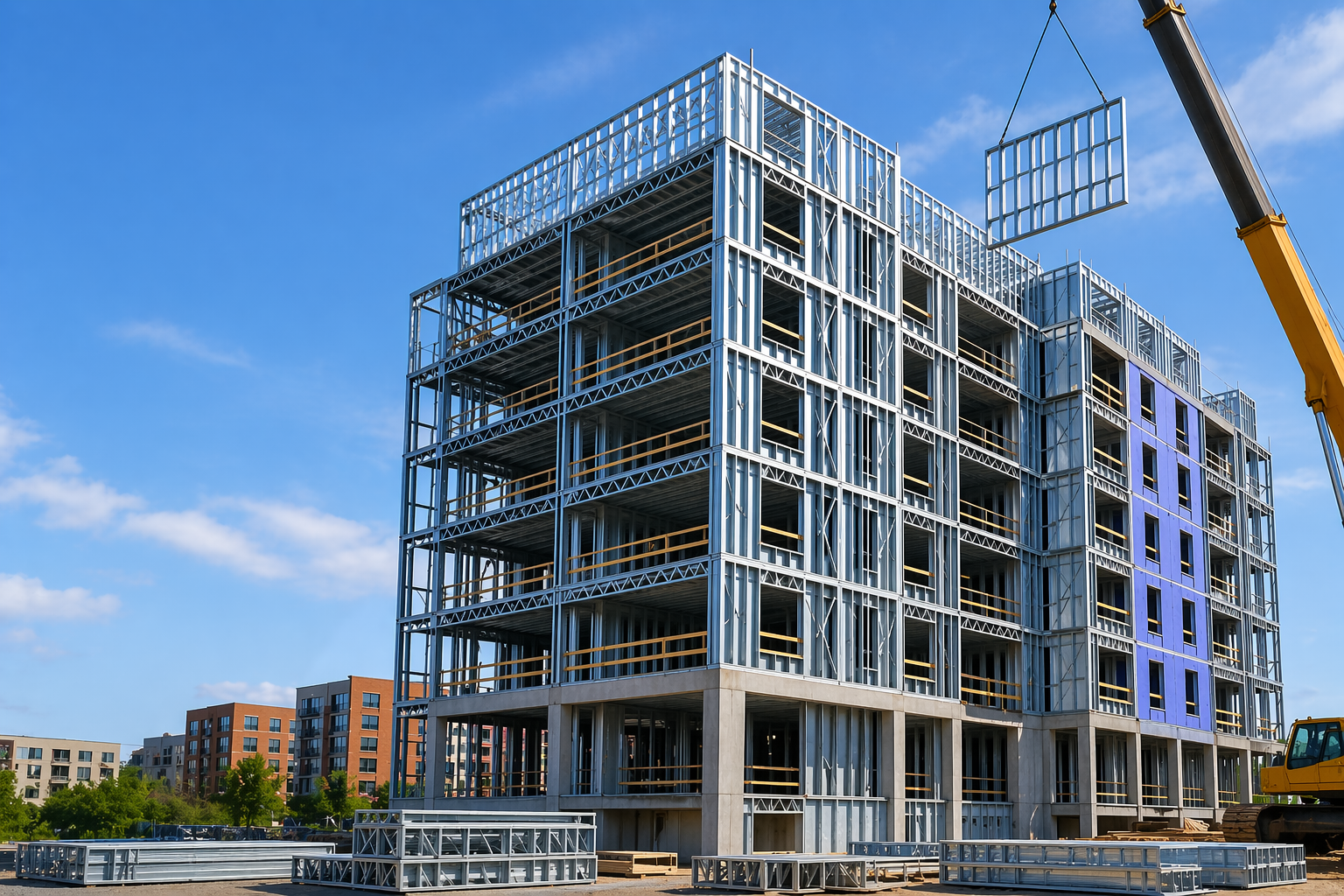
Panelized Metal Framing for Built-to-Rent Communities: Where the Real Payoff Shows Up
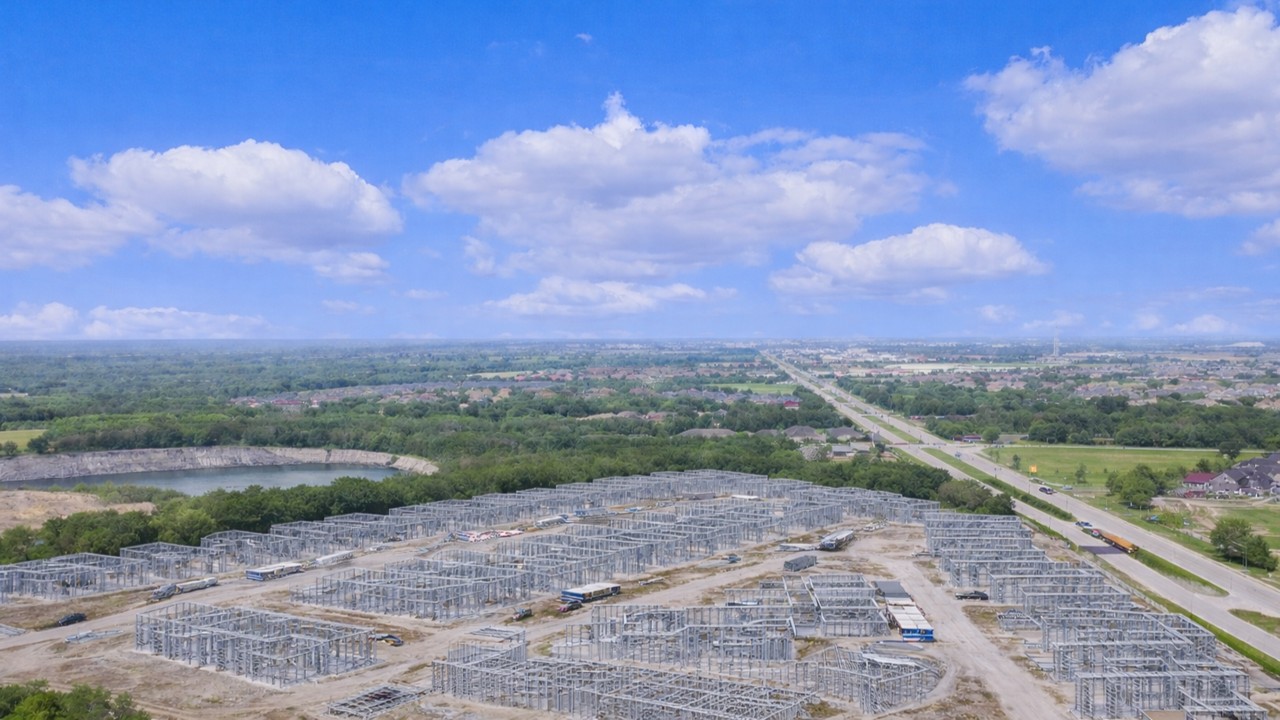
Built-to-rent communities don’t fail because the market disappears overnight. They fail because execution gets sloppy at scale.
A single custom home can survive “field decisions.” A 150-unit BTR community cannot. When the prototype drifts, every minor framing inconsistency becomes a compounding cost: drywall fighting wavy walls, trim crews shimming openings, cabinet installs slowing down, punch lists expanding, and schedules slipping in ways that don’t show up neatly in a bid tab.
Panelized metal framing is not a magic trick. It’s a different risk profile.
Instead of betting your schedule on jobsite labor consistency and daily coordination, you shift more decisions upstream into engineering, detailing, and controlled fabrication. In BTR, that trade can be worth a lot—because the entire model depends on predictable cycle time and repeatable outcomes under production pressure.
Below is what panelized metal framing changes in a BTR context, where the ROI actually comes from, and what you need to lock down early to avoid missing the benefits.
Why BTR Rewards Panelization More Than Most Project Types
BTR has three characteristics that make panelized systems unusually powerful:
1) Repetition is real, not theoretical
BTR communities typically reuse a small set of unit plans (with minor elevation swaps). That’s exactly the environment where panelization compounds: once the prototype is engineered, coordinated, and proven, every additional building becomes less of a “project” and more of a repeatable production run.
2) Cycle time is a financial variable
In BTR, schedule isn’t just a delivery promise. It’s tied to carry costs, draws, lease-up sequencing, and revenue timing. Shaving weeks off framing-to-dry-in can change the financial curve—especially when you’re delivering in phases.
3) Labor volatility hurts twice
Labor volatility doesn’t only change cost; it changes sequencing reliability. Broader construction trends continue to highlight labor constraints and planning uncertainty going into 2026.
Panelization reduces the number of “critical-path labor days” you need on site, which is often the difference between a manageable schedule and a slow bleed.
The Practical Benefits of Panelized Metal Framing in BTR
Benefit 1: Faster dry-in is the headline, but “cleaner sequencing” is the real win
Yes, panelized systems can accelerate erection. But the deeper advantage is this: they reduce the number of on-site decisions required to reach dry-in.
Dry-in is where the job changes from weather-exposed to trade-stacked. If your framing path is more predictable, you can sequence MEP rough-ins, insulation, drywall, and finishes with fewer interruptions and less idle time.
What this looks like in the field:
- Openings land where they’re supposed to, so windows/doors don’t become a rework loop
- Party walls and rated conditions are repeated correctly across buildings
- Truss and load-path interfaces aren’t “figured out” in the moment
- Punch lists shrink because downstream scopes stop compensating for upstream variability
There are also credible examples showing how noncombustible panelized assemblies can materially speed structural cycles in mid-rise contexts (erection “slab to roof” improvements have been documented in case-study-style research).
Benefit 2: Prototype lock is easier to enforce
Most developers believe they have a “standard unit.” In reality, the field often builds a moving target:
- One superintendent prefers a different corner detail
- One crew frames a stair opening slightly differently
- One building gets a different shear approach because “it worked last time”
Panelized metal framing forces prototype discipline. If a detail changes, it must change in the model and in the fabrication package—not casually in the field.
This matters because BTR value is rarely in inventing new assemblies. It’s in repeating the right assemblies correctly, across multiple phases, under pressure.
Benefit 3: Straighter walls and tighter openings reduce finish friction
Metal framing, when detailed and installed correctly, has a consistency advantage: studs are uniform, less sensitive to moisture movement, and less variable than jobsite lumber conditions.
In BTR, finishes are where you either protect margin—or quietly lose it:
- Cabinets and countertops reveal out-of-plumb walls fast
- Trim highlights opening irregularities
- Flooring transitions amplify framing inconsistencies
Panelization can improve these outcomes by combining controlled fabrication practices with repeatable QA checks before panels reach the site.
Benefit 4: Less jobsite chaos equals fewer compounding delays
BTR sites are busy. You’re not building one structure; you’re building a small town.
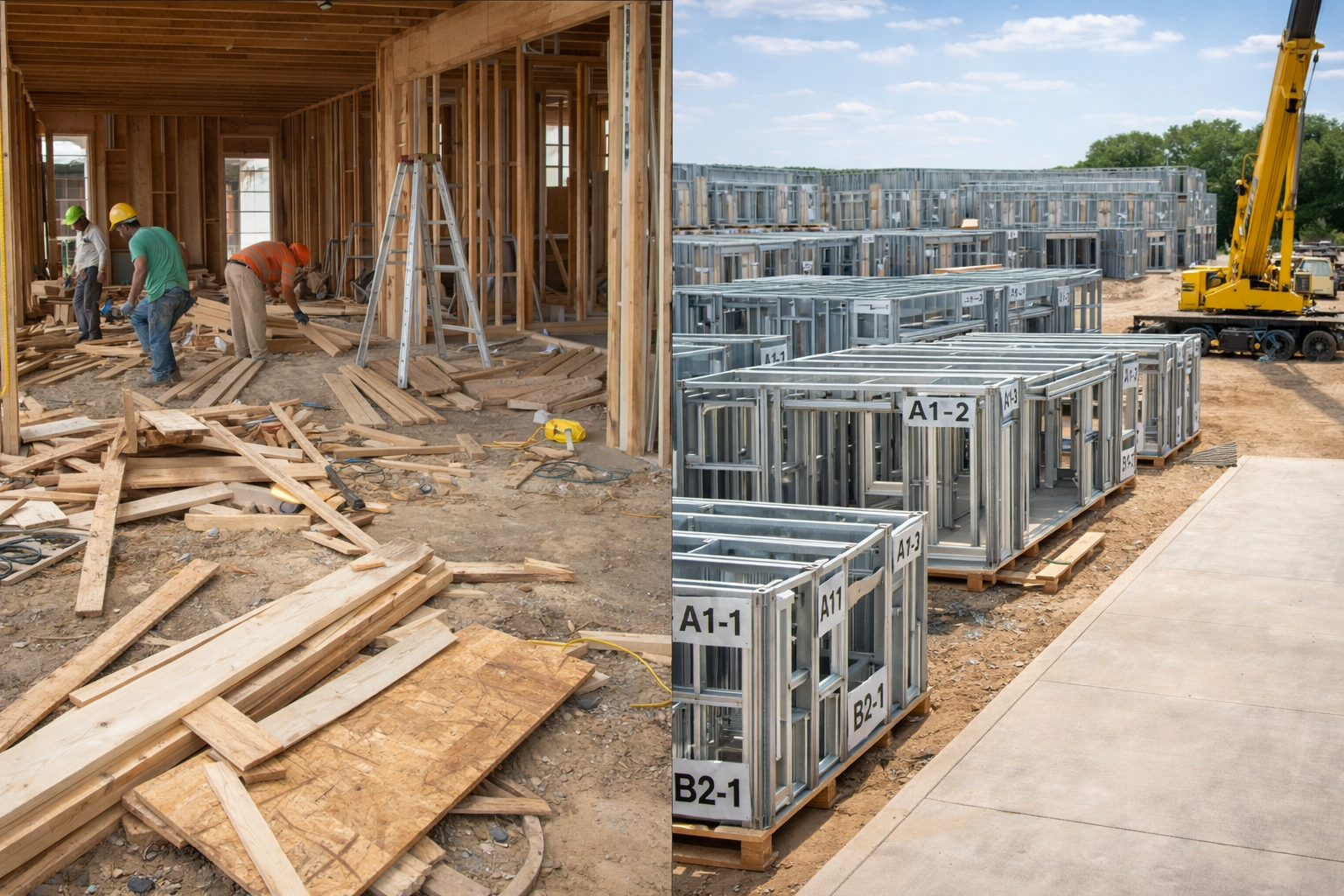
Panelized packages reduce on-site cutting, sorting, and improvisation. That reduces:
- Congestion and material handling waste
- Supervisor bandwidth consumed by constant framing decisions
- Rework created by “fix it in the field” culture
Offsite construction research commonly points to controlled environments improving quality consistency and reducing waste compared to purely site-built approaches.
Benefit 5: Risk profile can improve for fire exposure and insurance conversations
In some markets, combustible framing introduces real exposure—both during construction and in long-term underwriting conversations. Steel and cold-formed steel are often framed as advantageous in fire-risk narratives, and insurance savings are frequently cited in industry materials.
Not every project sees immediate premium changes, and underwriting is never one-size-fits-all—but developers evaluating long-term risk (and lenders evaluating construction exposure) tend to treat noncombustible structural strategies differently than conventional wood frames.
A Simple Comparison: Where Panelized Metal Framing Changes the BTR Equation
Where Panelized Metal Framing Does Not Automatically Win
Panelization can underperform when teams treat it like “faster stick framing” instead of a system.
1) If design isn’t stable, panelization becomes expensive motion
If unit plans, openings, MEP pathways, or structural assumptions are still moving, you’ll pay for churn:
- Redesign
- Re-fabrication
- Field patches that erase the benefit
Panelization rewards discipline. If the prototype won’t stay locked, the compounding benefits won’t show up.
2) If tolerance strategy is unclear, the field gets stuck “making it fit”
Panels are precise. Foundations are not always precise.
If your tolerance plan isn’t defined—hold-down locations, slab edges, anchor placement, interface conditions—install can slow down instead of speeding up.
3) If logistics are treated as an afterthought, “offsite” becomes “off schedule”
Staging, crane time, truck sequencing, and set paths matter.
A panelized approach needs a jobsite plan that respects reality: access, weather windows, laydown space, and trade interference.
4) If scope boundaries are fuzzy, you’ll create RFI factories
The biggest pain points show up at interfaces:
- Panel-to-truss (or panel-to-joist) transitions
- Rated party walls
- Shear transfer details
- Window/door rough openings and buck strategy
- MEP penetrations (what is cut where, by whom)
Without clear scope maps, the job becomes an argument instead of a system.
How Developers and GCs Should Evaluate Panelized Metal Framing for BTR
Step 1: Identify whether your project is a “panelization fit”
Panelization tends to be strongest when you have:
- True plan repetition across buildings
- Tight cycle-time targets
- A desire to reduce jobsite labor dependence
- Finish scopes sensitive to framing quality
- Multi-phase delivery where learning compounds
Step 2: Pressure-test prototype discipline early
Before you commit, ask:
- Are elevations and openings frozen enough to lock?
- Are your typical plan exceptions documented?
- Are your structural/rated assemblies standardized?
- Are you willing to enforce “no field freelancing”?
Step 3: Define the success metrics that actually matter in BTR
Not “cost per stud.” Metrics that reflect BTR reality:
- Days from slab to dry-in
- Rework hours per building (framing + finishes)
- Punch list counts tied to framing/opens
- Variance between buildings (same plan, different execution)
- Trade stacking effectiveness after enclosure
Step 4: Treat engineering and detailing as the control room
Panelized systems live or die in preconstruction. The best outcomes come when structure, MEP coordination, openings, and load paths are resolved before fabrication—not while crews are waiting in the field.
This is also where experienced panelized cold-formed steel teams differentiate themselves: not by shipping steel, but by shipping decisions already made.
The Bottom Line for BTR Decision-Makers
Panelized metal framing is best understood as a repeatability engine.
It helps BTR teams because it:
- Forces prototype discipline
- Reduces jobsite variability that multiplies across phases
- Improves sequencing reliability around dry-in
- Cuts finish friction caused by inconsistent framing
- Shifts risk forward into preconstruction, where it’s cheaper to solve
But it only pays off when the project is ready to operate like production: stable plans, clear interfaces, defined tolerances, and logistics that match the installation strategy.
BTR rewards teams who treat framing as a system, not a commodity. Panelized metal framing is one of the most direct ways to build that system—when the project is set up to let it work.
Related posts
SEE ALL POSTS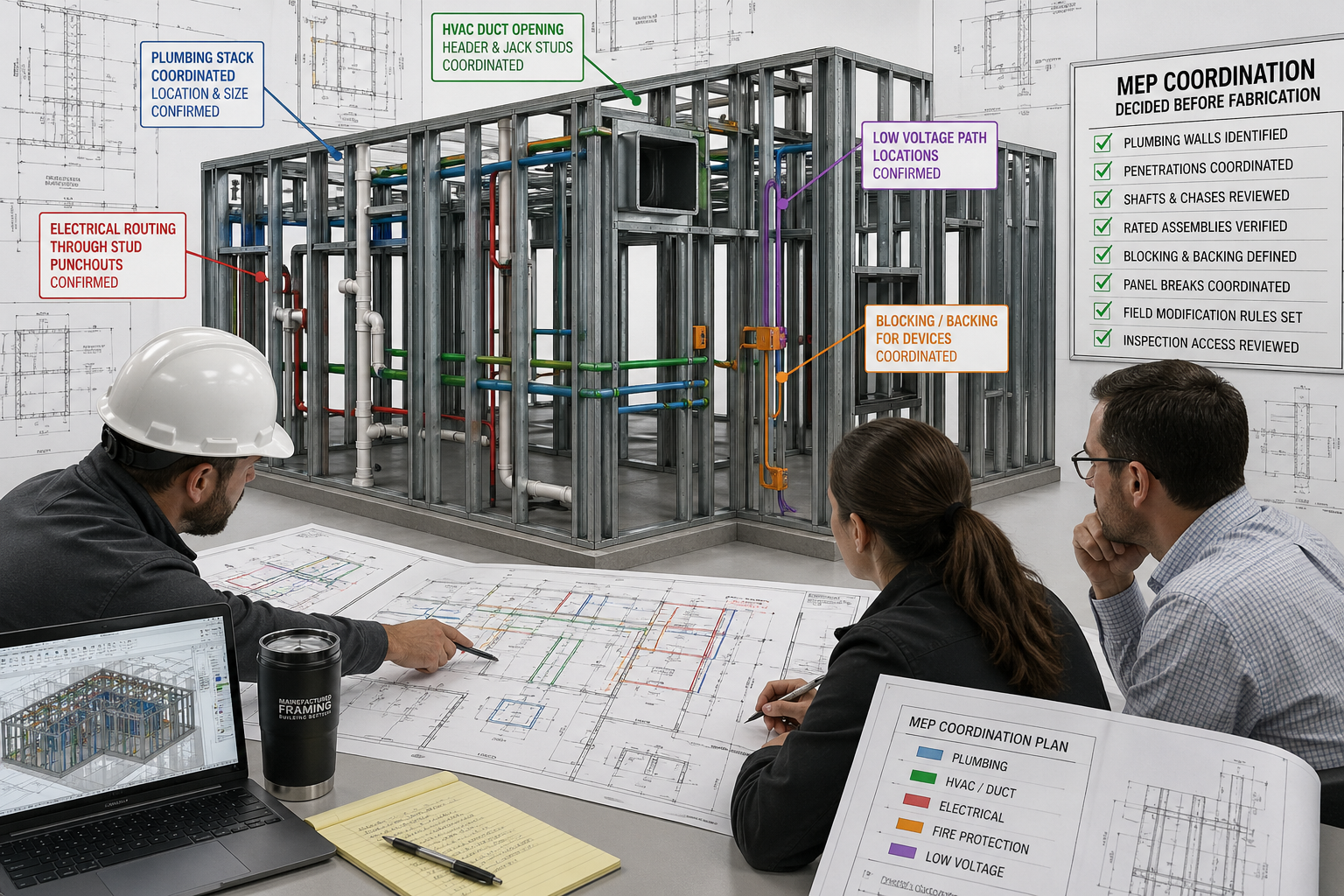
MEP Coordination in Panelized Cold-Formed Steel: What Must Be Decided Before Fabrication
Cold-Formed Steel for Custom Homes: What High-End Builders Need to Know