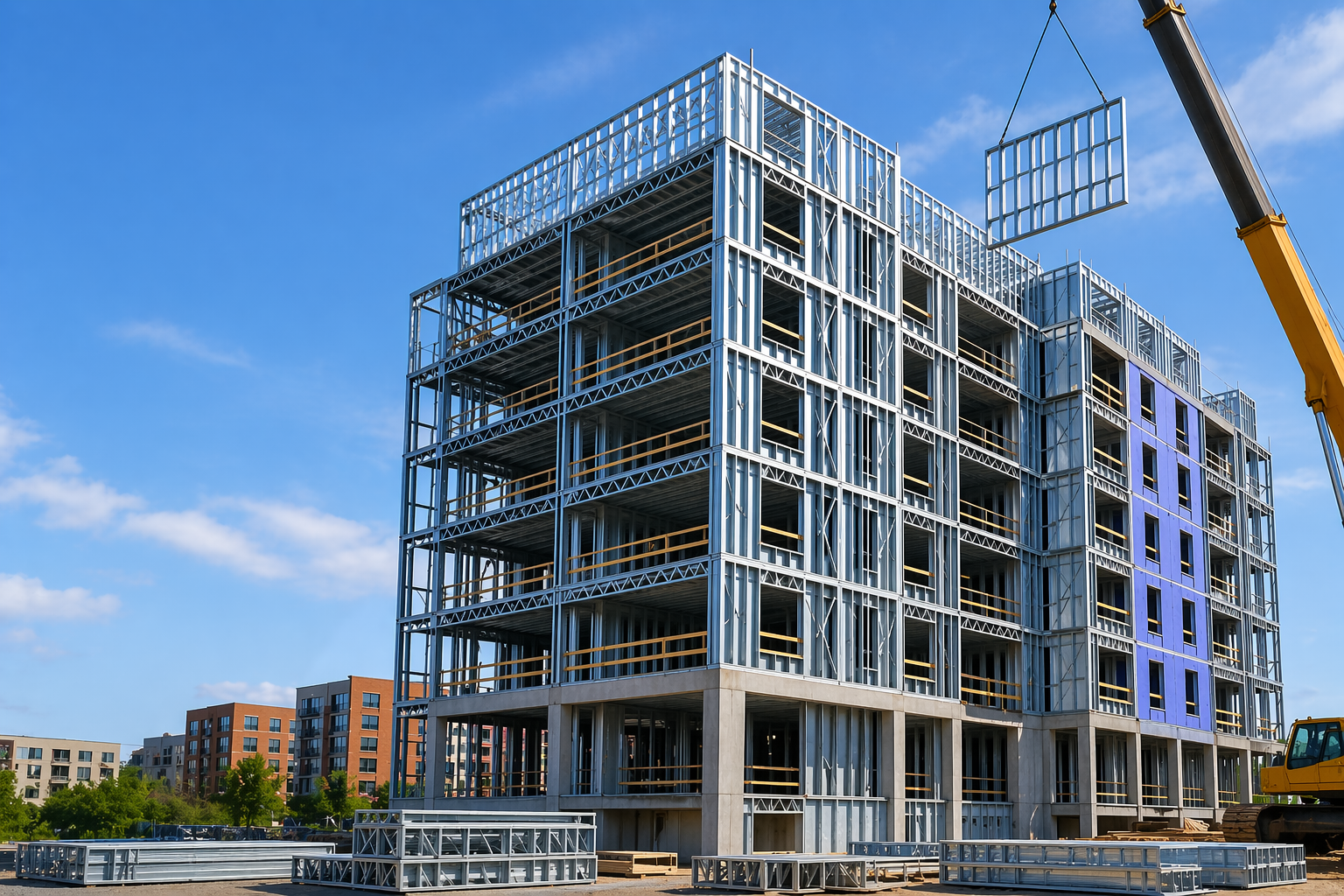
What Is Panelized Cold-Formed Steel Framing—and Why It’s the Logical Next Step for Modern Construction
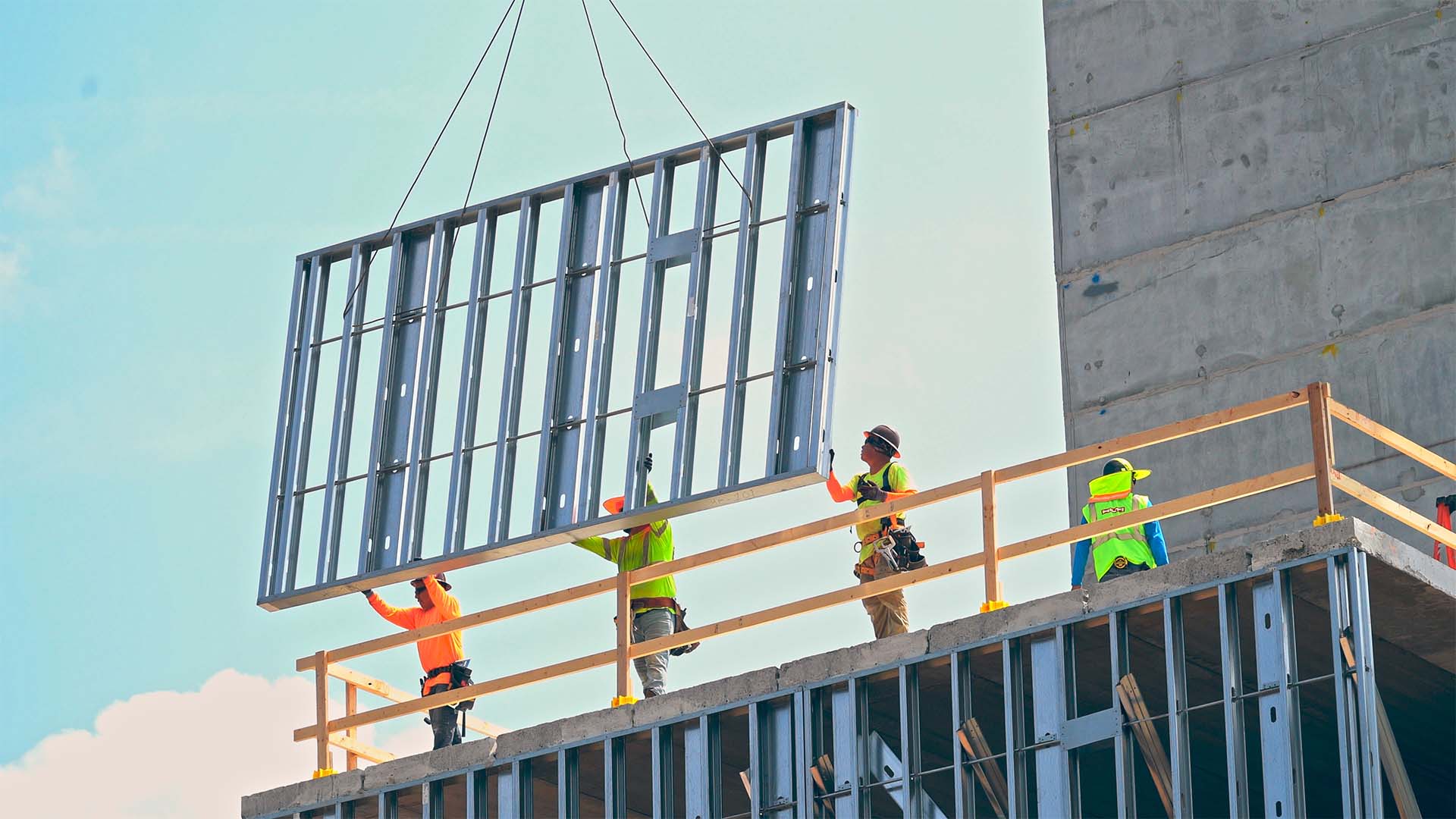
Framing Is Not a Commodity—It’s the Backbone of the Entire Project
Every building begins with a frame.
That frame dictates structural performance, construction sequencing, labor exposure, and how much tolerance the rest of the building will—or will not—have for error. Once the frame is in place, every trade that follows is constrained by its accuracy.
Despite this, framing decisions are often made by habit rather than intent.
In an environment defined by labor shortages, compressed schedules, insurance scrutiny, and tighter capital controls, how a building is framed has become a strategic decision, not a technical afterthought.
To understand why panelized cold-formed steel framing is gaining traction, it’s important to start with how framing is traditionally done—and where that approach begins to break down.
What Is the Building Frame?
The building frame is the structural skeleton that:
- Transfers gravity and lateral loads to the foundation
- Defines wall, floor, and roof geometry
- Establishes tolerances for MEP systems, exterior envelope, and finishes
When framing is inconsistent, misaligned, or field-adjusted, the consequences ripple outward:
- MEP conflicts increase
- Exterior tolerances tighten
- Finish trades absorb rework
- Schedules compress downstream
This is why experienced developers increasingly treat framing as risk infrastructure, not just material and labor.
The Primary Framing Systems Used Today
Most low- and mid-rise buildings rely on one or more of the following structural systems.
Each system has legitimate use cases. The issue is not the materials—it is how they are delivered and assembled.
How Buildings Are Traditionally Framed—and Why It Creates Risk
Traditional framing—whether wood or steel—is still largely executed piece by piece on site.
A typical workflow looks like this:
- Bulk material is delivered and stored on site
- Individual studs are cut, assembled, adjusted, and reworked in the field
- Walls are framed horizontally, tilted up, braced, and corrected
- Openings and headers are interpreted and built by crews on site
This method introduces several systemic limitations:
High labor dependency
Quality is directly tied to crew skill, supervision, and availability—variables that are increasingly difficult to control.
Weather exposure
Rain, wind, heat, and cold reduce productivity, degrade materials, and affect accuracy.
Material waste
Offcuts, damaged studs, mis-cuts, and over-ordering are built into site framing economics.
Material loss and theft
Loose framing material staged on jobsites is frequently lost or stolen, especially on long-duration or multi-phase projects.
Dimensional variability
Field-built assemblies rarely match design tolerances exactly, increasing coordination friction with MEP, façade, and interiors.
In effect, traditional framing concentrates complexity and risk at the jobsite, where conditions are least controlled and most expensive to correct.
Introducing Panelized Cold-Formed Steel Framing
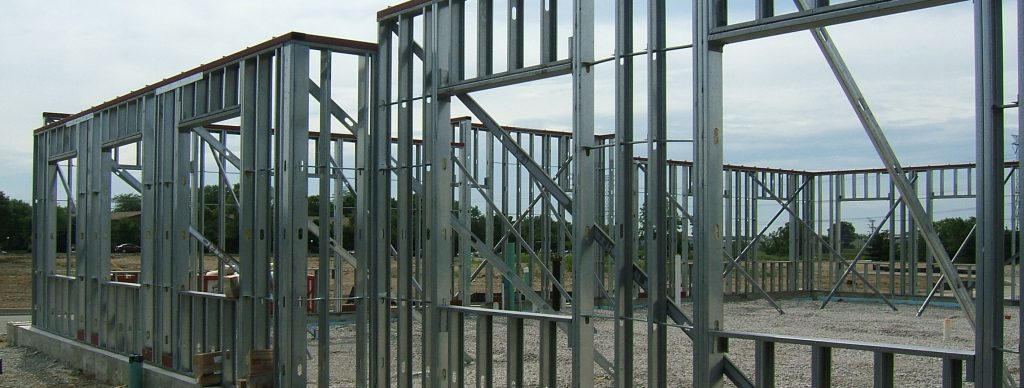
Panelized cold-formed steel framing replaces site-based fabrication with pre-engineered, factory-built assemblies.
The process begins with structural engineering, not the jobsite.
Rather than overbuilding to accommodate field uncertainty, the framing system is engineered to meet the exact structural demands of the building—no more, no less. Stud sizes, gauges, spacing, headers, and connections are optimized to carry required loads efficiently, often reducing material quantities compared to conventional approaches.
Once engineered, wall, floor, and roof assemblies are manufactured in a controlled factory environment:
- Panels are built to precise tolerances
- Openings, headers, and load paths are defined upfront
- Panels are labeled, sequenced, and quality-checked
- Assemblies are shipped flat to the site
Because cold-formed steel is lightweight, panels can often be erected manually or with minimal lifting equipment, even on multi-story projects. This reduces crane dependency and simplifies site logistics.
Importantly, cold-formed steel can function as a primary load-bearing structural system. When properly engineered, panelized CFS can support buildings up to five stories without the need for structural steel, substituting more expensive systems while maintaining strength, fire resistance, and dimensional stability.
Panelized CFS also integrates seamlessly with other framing systems. It commonly interfaces with concrete podiums, structural steel transfer levels, CMU or concrete shear walls, and hybrid assemblies. This makes it well-suited for mixed-use and transitional projects where multiple structural systems must work together without introducing coordination friction.
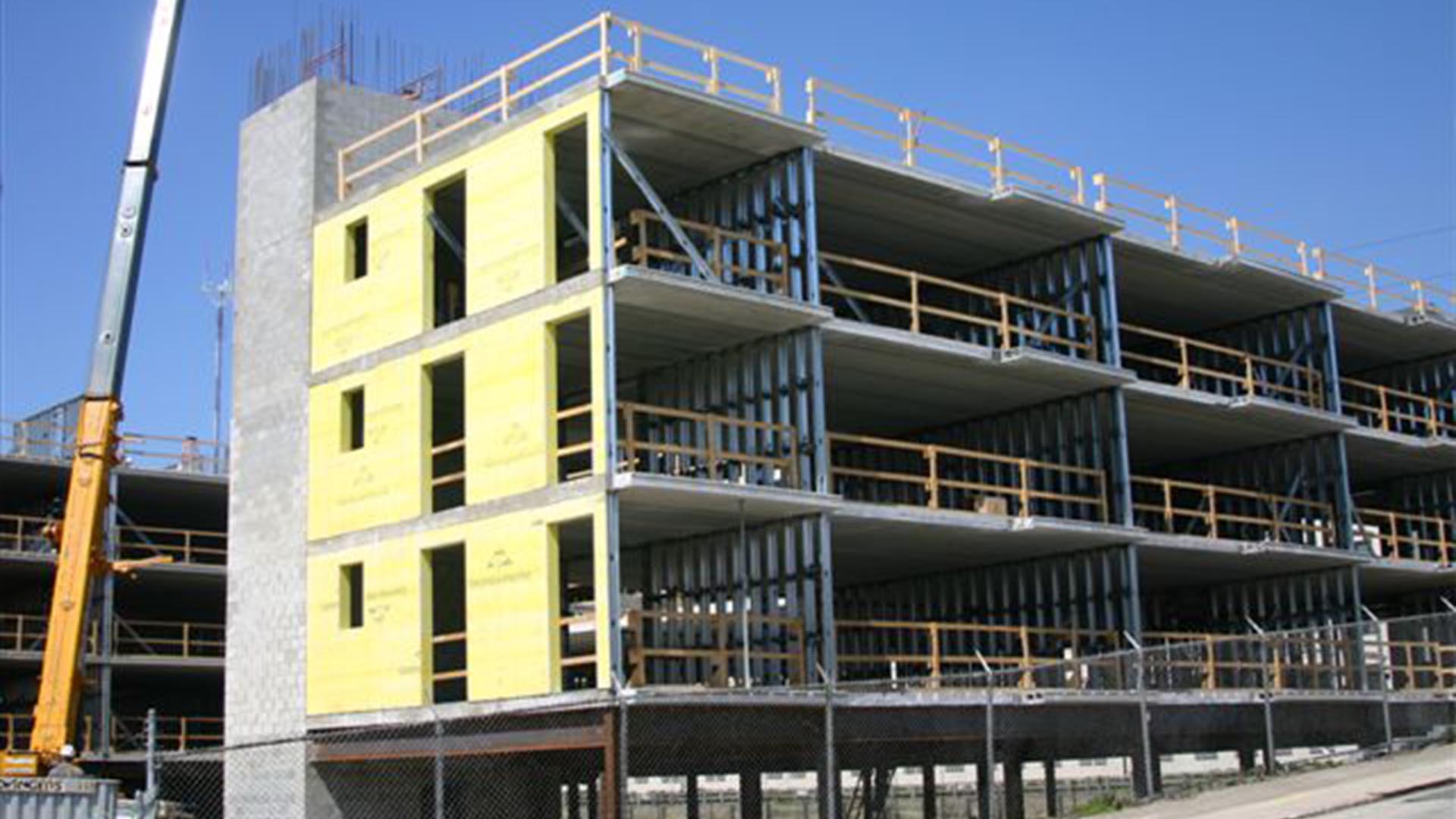
On site, framing shifts from fabrication to assembly—panels are set, aligned, fastened, and ready for follow-on trades with far less variability.
Panelized Framing vs. Modular Construction
Panelized framing is often grouped with modular construction, but the distinction is critical.
Modular construction delivers volumetric units—entire rooms or building sections fabricated offsite. While appealing conceptually, modular introduces significant real-world challenges:
- Jurisdictional and permitting complexity
- Transportation limits and escort costs
- Crane dependency and weather sensitivity
- Financing, insurance, and inspection complications
- Reduced design flexibility once modules are committed
Panelized framing avoids these constraints.
Panels ship flat, integrate with conventional construction sequencing, and preserve architectural and structural flexibility while still capturing the benefits of offsite manufacturing.
For a detailed comparison, see: https://www.mainefacturedframing.com/blog/prefab-vs-modular-construction
Panelization delivers manufacturing discipline without forcing a modular business model.
Why Panelized CFS Is Gaining Momentum
The growing adoption of panelized cold-formed steel framing is driven by practical outcomes on real projects.
By shifting work offsite and resolving structure upfront, teams see:
Schedule compression
Fabrication occurs in parallel with site work, often removing weeks from the critical path.
Improved cost effectiveness
Optimized engineering reduces excess material, lowers rework, and often replaces more expensive structural systems—making panelized CFS competitive or cheaper on a total installed basis.
Labor risk reduction
On-site labor requirements are lower and less specialized, insulating projects from workforce volatility.
Higher quality and consistency
Factory-built assemblies achieve repeatable tolerances that improve MEP coordination and envelope performance.
Risk pulled forward
Uncertainty is addressed during engineering and manufacturing, where it is cheaper and easier to manage than in the field.
On repeatable building types, these benefits compound across phases and projects.
Where Panelized CFS Delivers the Most Value
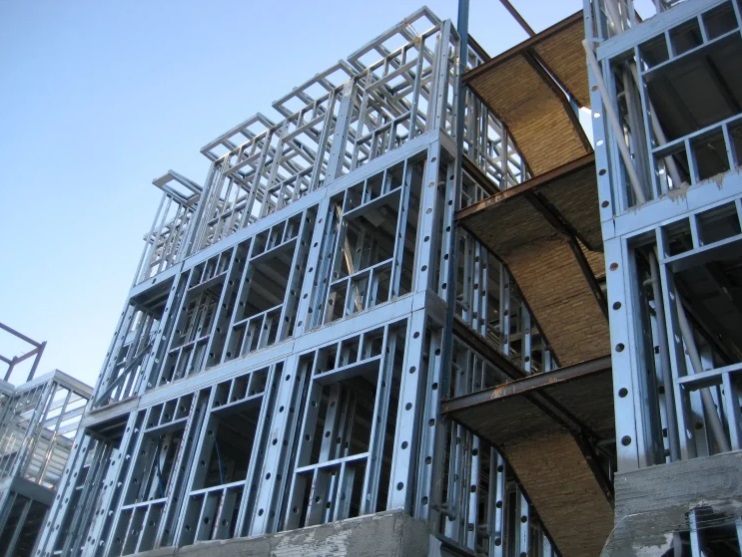
In built-to-rent and repeatable residential, standardized unit layouts allow panels to be optimized once and deployed many times, reducing cycle time and labor exposure across entire communities.
In multifamily and mixed-use projects, load-bearing CFS walls paired with podiums or transfer structures reduce reliance on structural steel while improving schedule reliability.
In hospitality, tight tolerances and repeatable room layouts align naturally with panelized delivery, supporting aggressive opening timelines.
In self-storage and light commercial, panelization minimizes field labor while maintaining durability and fire resistance.
In high-performance custom homes, panelized CFS delivers straightness, precision, and envelope consistency that are difficult to achieve reliably with site-built methods.
A Shift in How Buildings Are Delivered
Panelized cold-formed steel framing is not simply an improvement in material performance.
It represents a fundamental shift in how buildings are designed, coordinated, and delivered.
Traditional framing methods push decision-making downstream, resolving structural questions, tolerances, and coordination issues on the jobsite—where variability is highest and corrections are most expensive.
Panelized CFS reverses that model.
Structural requirements are resolved during engineering. Assemblies are designed to carry exactly the loads required. Coordination happens before materials arrive on site. Fabrication takes place in controlled conditions, and construction becomes an exercise in assembly rather than improvisation.
The result is a shift:
- From site-driven execution to engineered delivery
- From sequential construction to parallel workflows
- From labor-dependent outcomes to system-driven predictability
Most of the complexity is addressed before construction begins, when decisions are cheaper, options are wider, and risk is manageable.
In a market that increasingly rewards certainty over optimism, that shift is not incremental—it is structural.
Closing Perspective
Construction today operates with less tolerance for error than ever before.
Schedules are tighter. Labor is less predictable. Capital is more disciplined. Insurance and risk scrutiny are increasing, not easing.
Panelized cold-formed steel framing is emerging not because it is novel, but because it aligns with these realities. It brings manufacturing discipline to one of the most consequential phases of construction and replaces field variability with engineered intent.
For teams evaluating their next framing decision, the question is no longer whether panelized CFS can work.
It is whether traditional framing workflows still justify the level of risk they introduce.
Related posts
SEE ALL POSTS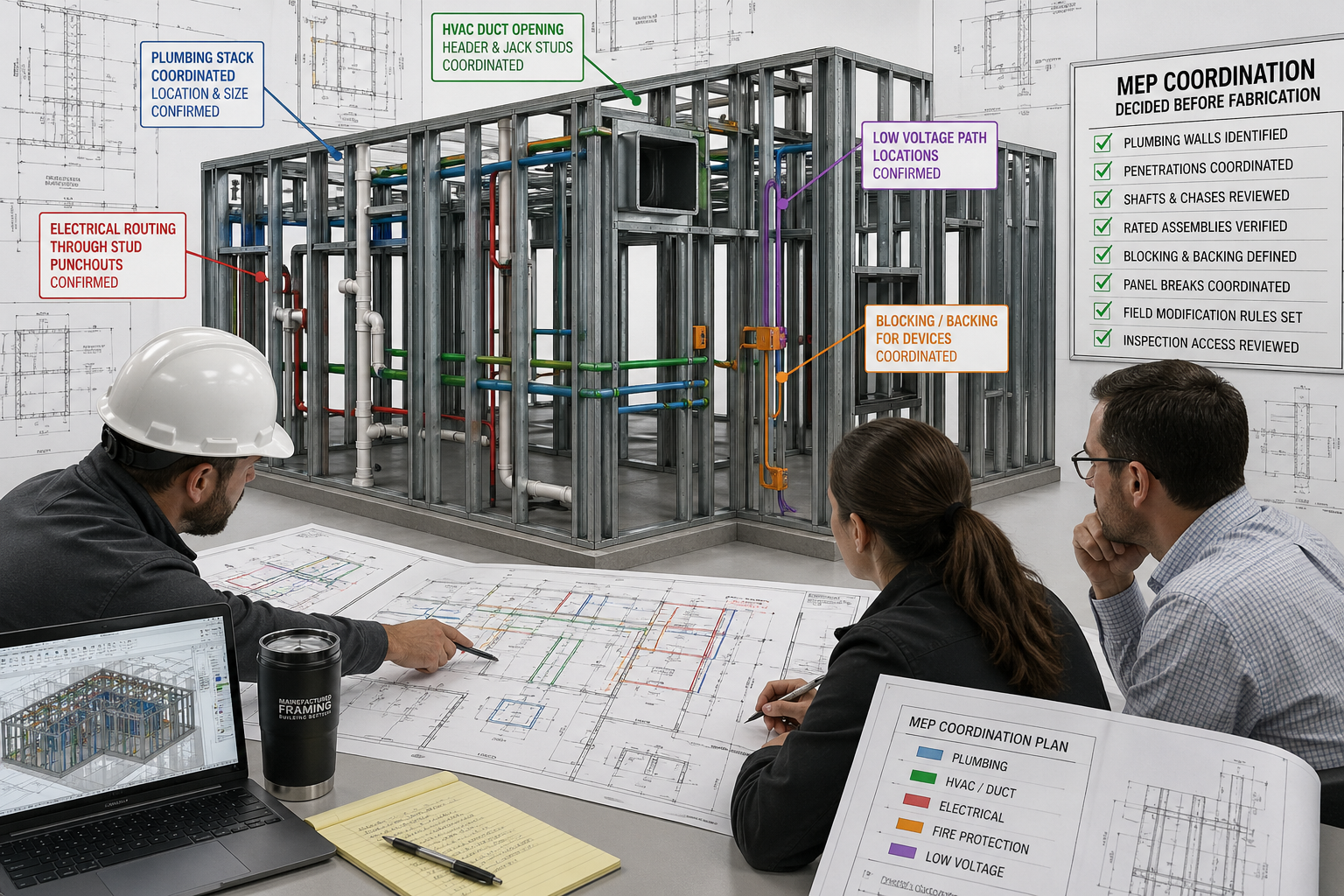
MEP Coordination in Panelized Cold-Formed Steel: What Must Be Decided Before Fabrication
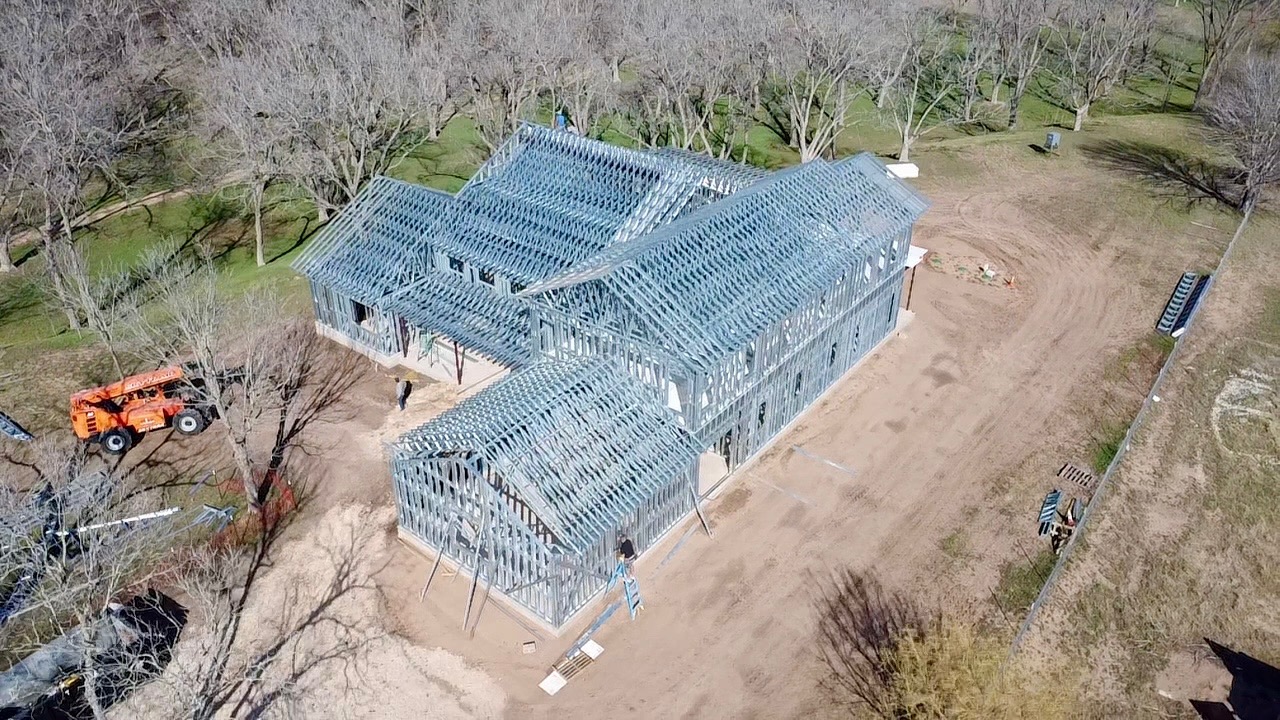
Cold-Formed Steel for Custom Homes: What High-End Builders Need to Know