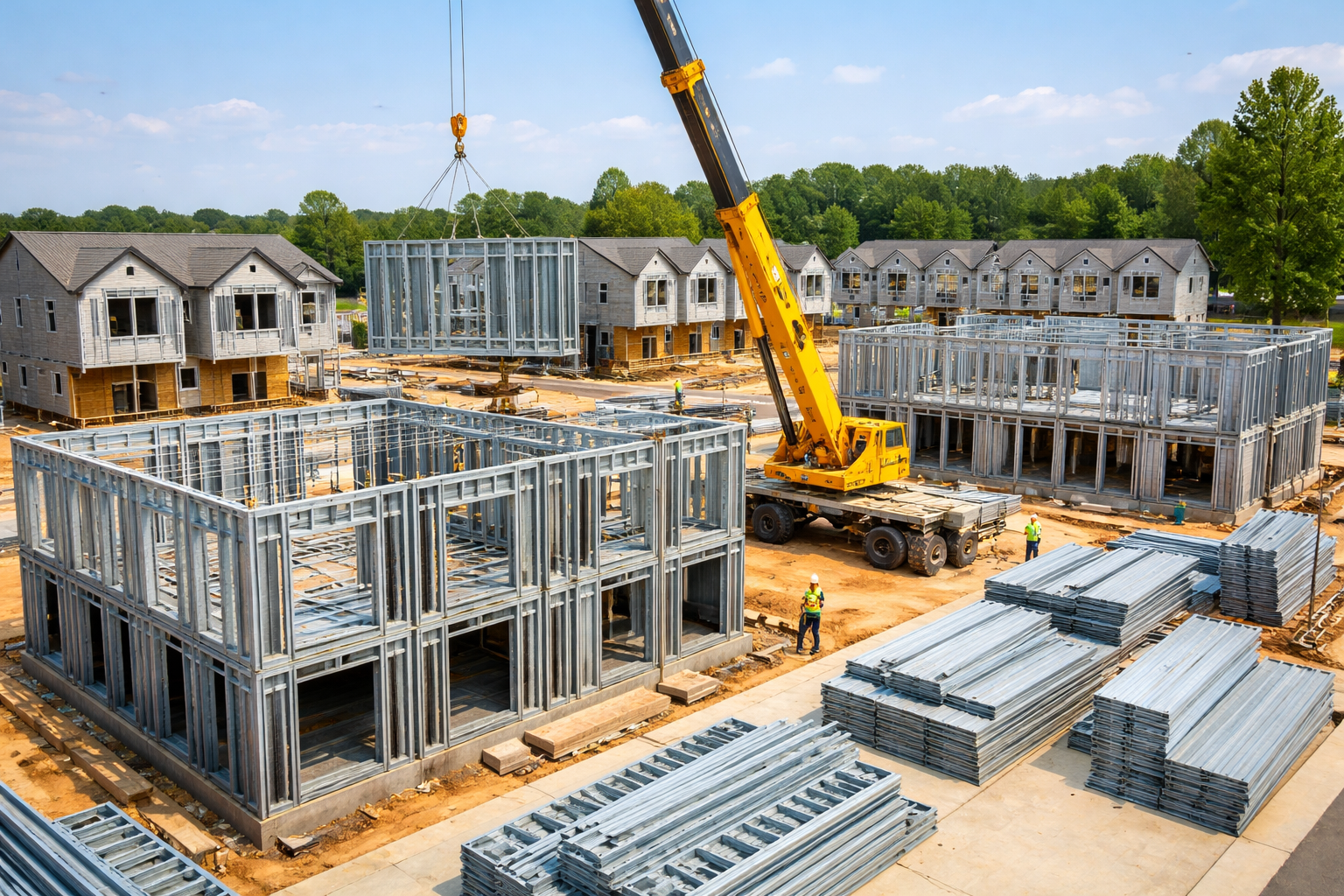
How Inspections Work with Panelized Cold-Formed Steel Framing
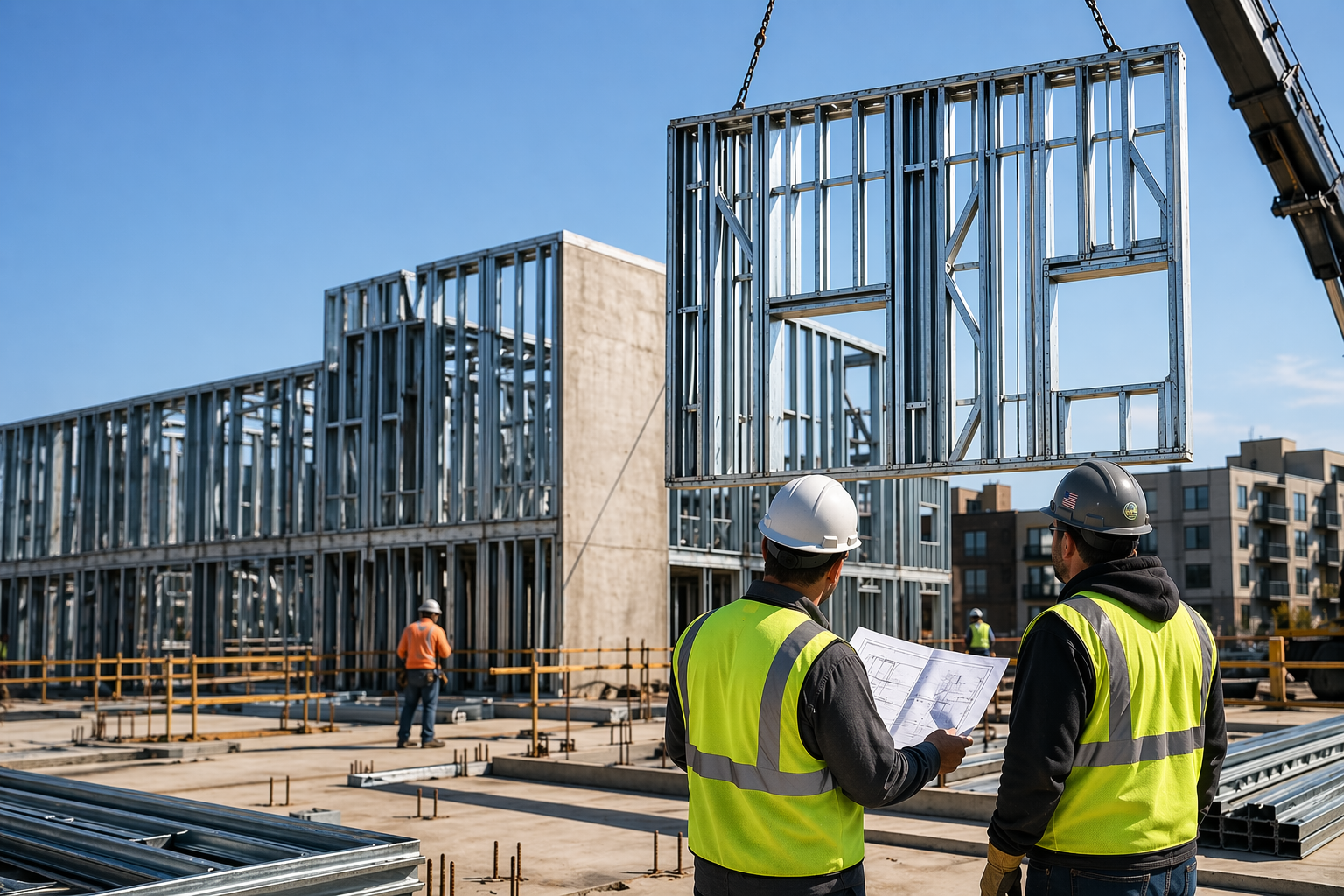
When teams first evaluate panelized cold-formed steel framing, one of the most common questions is whether inspections become harder, easier, or simply different.
The answer is usually: different, but often cleaner.
That matters because many developers, architects, and GCs have seen what happens when inspection readiness is left too late. Anchors do not line up. Deferred framing packages arrive after key approvals. MEP openings get field-cut without coordination. Firestopping gets treated as a downstream patch instead of part of the assembly strategy. None of those problems are caused by steel. They are usually caused by unresolved decisions.
Panelization does not remove the inspection process. What it does is move more of the important decisions earlier, so the field inspection becomes less about improvisation and more about confirming that the installed system matches the approved documents. That is a meaningful shift on multifamily, hospitality, and repeatable low-rise or mid-rise projects.
The First Thing to Understand: Panelization Does Not Bypass the AHJ
A panelized cold-formed steel project is still subject to the same local permitting and inspection framework as any other code-compliant building. The authority having jurisdiction still controls approvals on the project, and off-site construction standards now explicitly address planning, fabrication, inspection, regulatory compliance, in-plant inspection, and on-site final inspection for componentized, panelized, and modularized elements. ICC/MBI 1200 covers planning, design, fabrication, and assembly, while ICC/MBI 1205 addresses inspection and regulatory compliance for off-site work.
That point is important because panelized framing is often confused with fully volumetric modular delivery. In most panelized framing projects, the permitting and inspection path still looks familiar to the local building department. The difference is that more of the framing scope has already been engineered, detailed, fabricated, and labeled before it reaches the site.
Inspections Usually Start Before the Panels Ever Reach the Jobsite
On a well-run panelized project, inspection success begins upstream with submittals, engineering, and coordination.
That includes the structural design package, panel layouts, connection details, holdown and anchor information, any delegated truss or specialty framing design, and clarity around what is structural versus nonstructural framing. In the cold-formed steel standards ecosystem, AISI S220 governs nonstructural members, AISI S240 governs structural framing, and AISI S202 functions as the code of standard practice for design, fabrication, and installation customs when adopted by the contract documents. AISI S240 also includes a dedicated quality control and quality assurance section.
In practical terms, that means the inspection process gets easier when the project team has already resolved questions like:
- Which walls are load-bearing
- Which walls are part of the lateral system
- Which connections are deferred
- How anchors and embeds are coordinated to the slab
- Where MEP penetrations are allowed
- Which tested fire or sound assemblies are being used
- What can and cannot be altered in the field
When those decisions are unclear, inspectors are forced into interpretation mode. When they are clear, inspections tend to move faster.
What the Building Inspector Is Usually Looking For in the Field
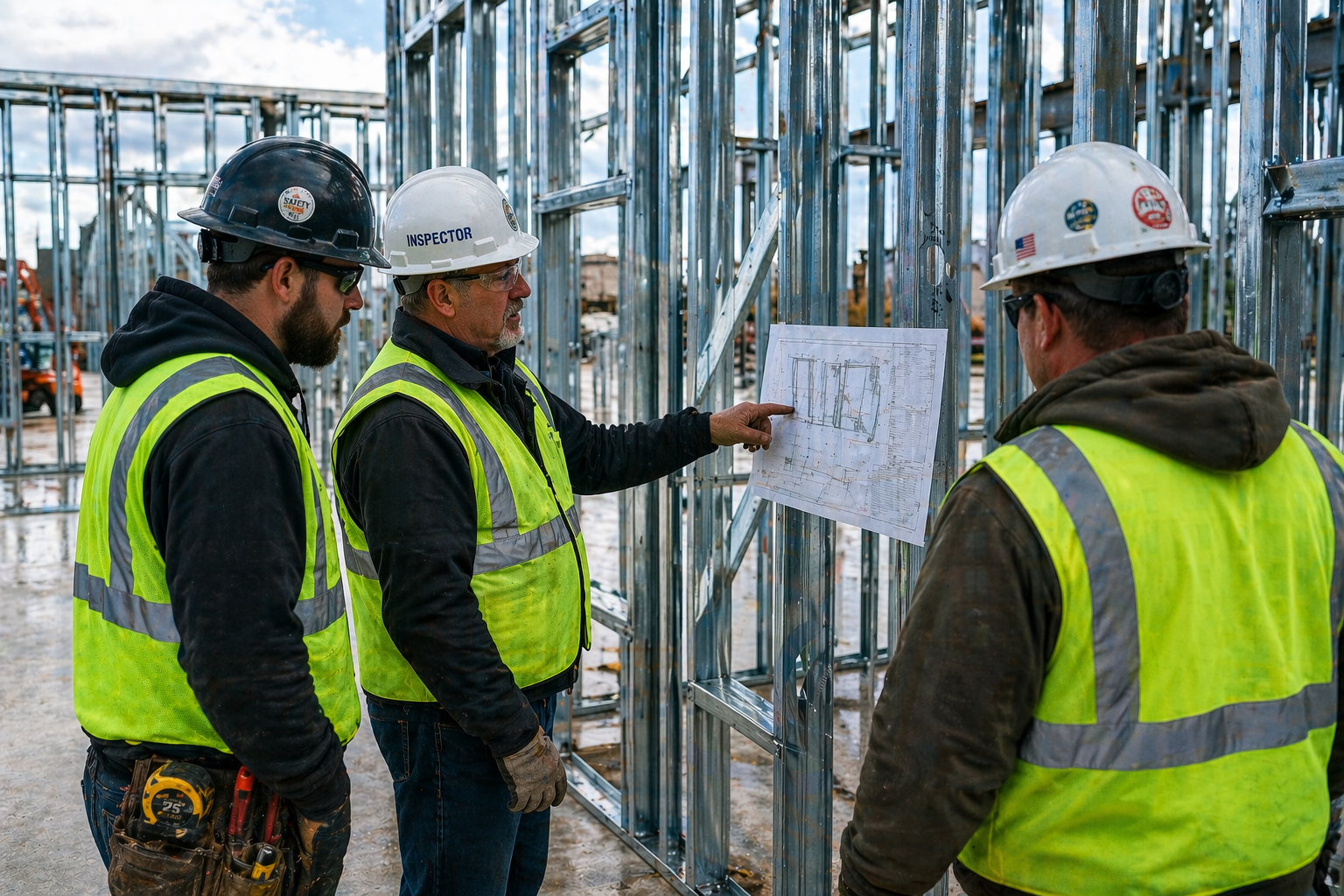
For most panelized cold-formed steel jobs, the normal field inspection sequence is not mysterious. The inspector is generally confirming that the installed framing matches the approved plans and applicable code requirements.
That often includes:
1. Foundation and anchor readiness
Before framed panels are set, the slab or foundation conditions matter. Layout, anchor placement, edge distances, embedment, and tolerances all affect whether panels can be installed correctly. The IBC contains specific provisions for anchorage of light-frame walls to concrete, including cold-formed steel light-frame walls in certain conditions.
2. Panel identification and placement
Inspectors want to see that the right panels are in the right locations, properly aligned, plumbed, and attached in accordance with the approved documents. Good labeling and shop-level organization help here more than people often realize.
3. Connections
This is where panelized projects either look disciplined or chaotic. Inspectors commonly verify screw patterns, holdowns, straps, clips, anchors, welds where applicable, and the connection of wall panels to floor and roof framing. On lateral systems, those details are especially sensitive because they affect the building’s wind and seismic performance.
4. Bracing and stability during erection
Temporary bracing is often overlooked in early conversations about prefab. But inspectors, superintendents, and installers all care about whether partially erected framing remains stable before the building diaphragm and adjacent framing fully engage.
5. Coordination before concealment
Before walls and floors are covered, inspection may also touch penetrations, framing modifications, draftstopping or fireblocking where required, and whether field changes have drifted away from the approved assembly logic.
In-Plant QA/QC Is Not the Same as Final Field Approval
One of the biggest misconceptions in panelized construction is that factory fabrication somehow replaces jobsite inspection.
It does not.
What factory QA/QC does is reduce variability. BuildSteel notes that AISI S240 includes minimum QA/QC requirements, while industry certification programs focus on documented manufacturing controls, tolerances, traceability, and installation qualifications. That improves consistency, but the project still needs the approvals and inspections required by the adopted code and the local jurisdiction.
That distinction matters because a panel can be fabricated accurately and still fail in the field if the slab is out, anchors are misplaced, holdowns are substituted, or openings get altered without engineering review.

When Special Inspections Enter the Picture
This is where the conversation gets more technical.
Not every panelized cold-formed steel project has the same special inspection burden. The scope depends on the building, the adopted code, the jurisdiction, and whether the framing elements are part of the main windforce-resisting system or seismic force-resisting system.
Under the IBC, cold-formed steel light-frame construction can require periodic special inspection for items such as welding, screw attachment, bolting, anchoring, and other fastening of elements within the main lateral systems, including shear walls, braces, diaphragms, drag struts, and hold-downs, subject to the code triggers and exceptions. The code also provides exceptions where special inspection is not required for certain shear wall and diaphragm conditions when edge fastener spacing is greater than 4 inches on center.
That is a very different issue from routine framing inspection.
So when people ask, “Will panelized steel require special inspections?” the accurate answer is: sometimes, but not automatically for every stud wall on the project. The right question is whether the specific assemblies and connections fall within the code-defined special inspection scope for wind, seismic, fire-resistive penetrations, anchors, or other triggered conditions.
Firestopping and Penetrations Are Often Where Projects Get Sloppy
On many projects, the framing itself is not the real inspection problem. The real problem is what happens after the framing is in.
Mechanical, electrical, and plumbing trades often need penetrations, backing, soffits, shaft framing modifications, and support points. If those changes are not anticipated early, teams start cutting, reinforcing, or rerouting in the field. That is where approvals and inspections begin to stall.
The IBC separately requires special inspection for penetration firestop systems and fire-resistant joint systems. So even when the steel framing is installed correctly, downstream trades can still create inspection exposure if penetrations and joint treatments are not aligned with the tested assembly and the approved documents.
Panelized framing helps here when the project team uses it as a coordination tool rather than only as a fabrication method.
What Usually Makes Panelized Inspection Go Smoothly
The projects that inspect cleanly usually have five things in place:
Clear delegated design boundaries
Everyone knows what is designed by the EOR, what is delegated to the framing engineer, and what cannot be changed without review.
Resolved anchor and embed coordination
The slab is not treated as someone else’s problem.
Panel-by-panel identification
The field can match the plan, the delivery, and the installation sequence without guesswork.
Defined rules for field modifications
Crews know what must be approved before cutting, drilling, or reframing.
Early trade coordination
MEP, firestopping, and acoustical requirements are addressed before concealment, not after inspection failure.
A Practical Way to Think About It
A good way to frame the issue is this:
Traditional site-built framing often asks the inspector to evaluate work that was also partly figured out in the field.
Panelized cold-formed steel framing works best when it asks the inspector to verify a pre-coordinated system.
That does not mean there is less accountability. It usually means accountability is distributed more intelligently: design earlier, fabrication with traceability, installation with labeled components, and field inspection focused on conformity rather than guesswork.
For developers and GCs, that is the real inspection advantage. Not that inspections disappear, but that the process can become more predictable.
Conclusion
Inspections with panelized cold-formed steel framing are not a loophole, a shortcut, or a separate universe. They are still part of the normal code and AHJ process.
What changes is the character of the work being inspected.
When the framing package is engineered clearly, fabricated consistently, labeled properly, and coordinated early with anchors, lateral details, MEP, and fire-resistive assemblies, inspections tend to become more orderly. When those issues are left unresolved, panelization does not save the project from inspection friction.
That is why the most effective framing partners do more than fabricate panels. They help turn the inspection process from a late-stage surprise into an outcome that was largely set up upstream.
Related posts
SEE ALL POSTS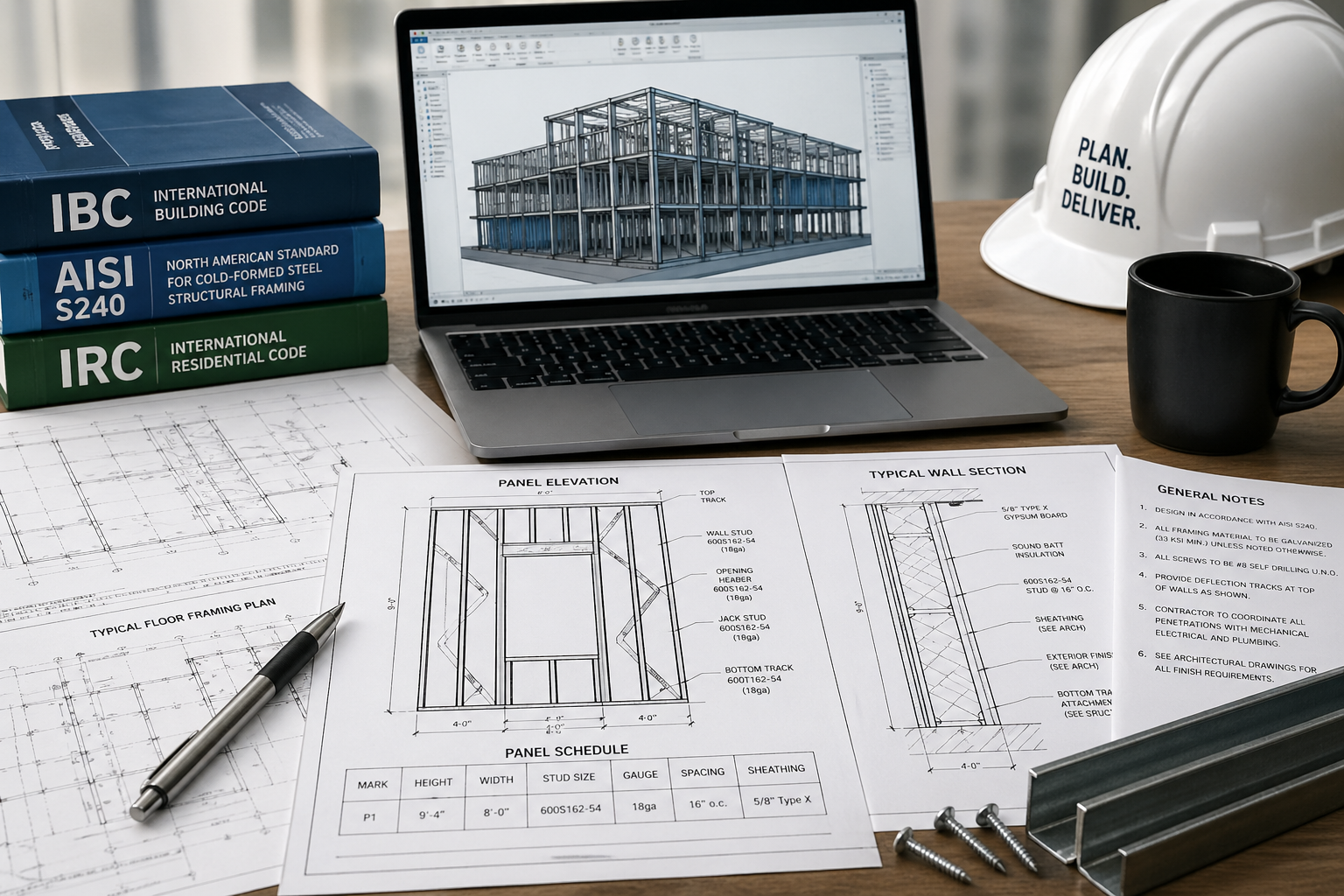
Does Cold-Formed Steel Change Permitting or Code Approval? Common Misconceptions Explained
How Inspections Work with Panelized Cold-Formed Steel Framing