Does Cold-Formed Steel Change Permitting or Code Approval? Common Misconceptions Explained
For many developers, architects, and general contractors, the first concern with cold-formed steel framing is not whether it performs structurally. It is whether it will complicate permitting.
That concern is understandable.
Most project teams have been trained by experience to avoid anything that might slow plan review, trigger additional questions from the authority having jurisdiction, or introduce uncertainty late in preconstruction. When schedules are already compressed and financing costs are unforgiving, no one wants a framing decision to become a code approval problem.
The good news is that cold-formed steel framing is not an experimental construction method. It is a code-recognized framing material with established design standards, engineering practices, inspection expectations, and long-standing use in commercial, multifamily, hospitality, institutional, and residential construction.
The better question is not, “Will cold-formed steel change permitting?”
The better question is, “What documentation and coordination are required so the permit review process stays clean?”
That distinction matters. Cold-formed steel framing does not usually change the permit pathway. Poorly coordinated cold-formed steel framing does.
Cold-Formed Steel Is Not a Special Approval System
One of the most common misconceptions is that cold-formed steel framing requires some special approval process simply because it is different from conventional wood framing.
In most projects, that is not the case.
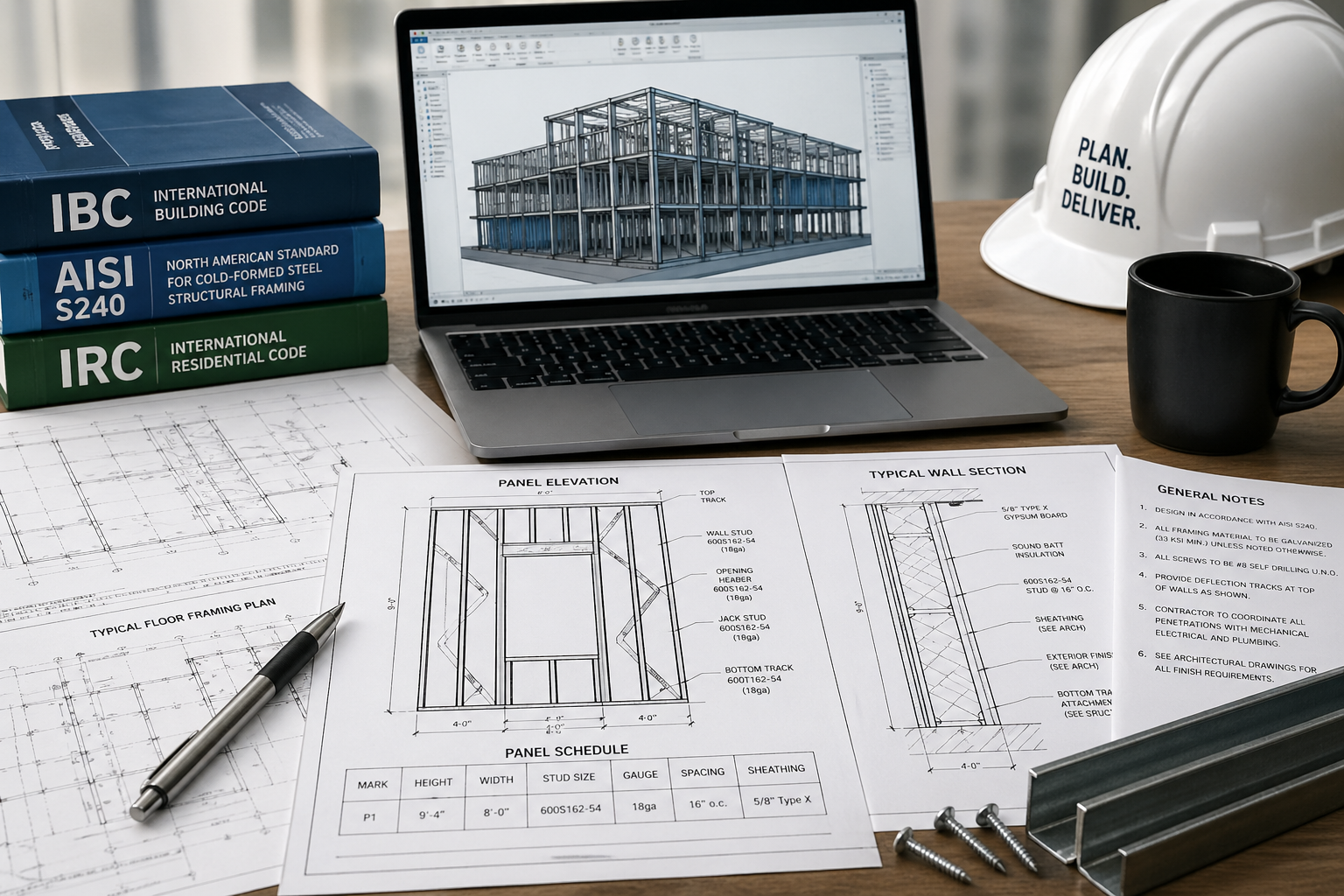
Cold-formed steel is addressed through recognized design standards and building code provisions. AISI S240, the North American Standard for Cold-Formed Steel Structural Framing, was developed to address requirements for cold-formed steel structural framing that are common to prescriptive and engineered design, and it is intended for use in the United States, Canada, and Mexico.
That matters because plan reviewers are not being asked to approve an unknown product category. They are reviewing a framing system that must be properly engineered, detailed, specified, and integrated into the project documents.
For a developer, this should shift the conversation from fear of approval risk to discipline around documentation.
The permitting question is not whether cold-formed steel is allowed. The question is whether the design team has clearly shown how the framing system complies.
Misconception 1: “Panelized CFS Means Modular Approval”
Panelized cold-formed steel framing is sometimes confused with modular construction. That creates unnecessary concern.
Panelized framing and modular construction are not the same thing.
Modular construction typically involves volumetric building units fabricated off site, often with a separate approval process related to factory-built construction, state modular programs, third-party inspections, transportation limitations, and setting procedures.
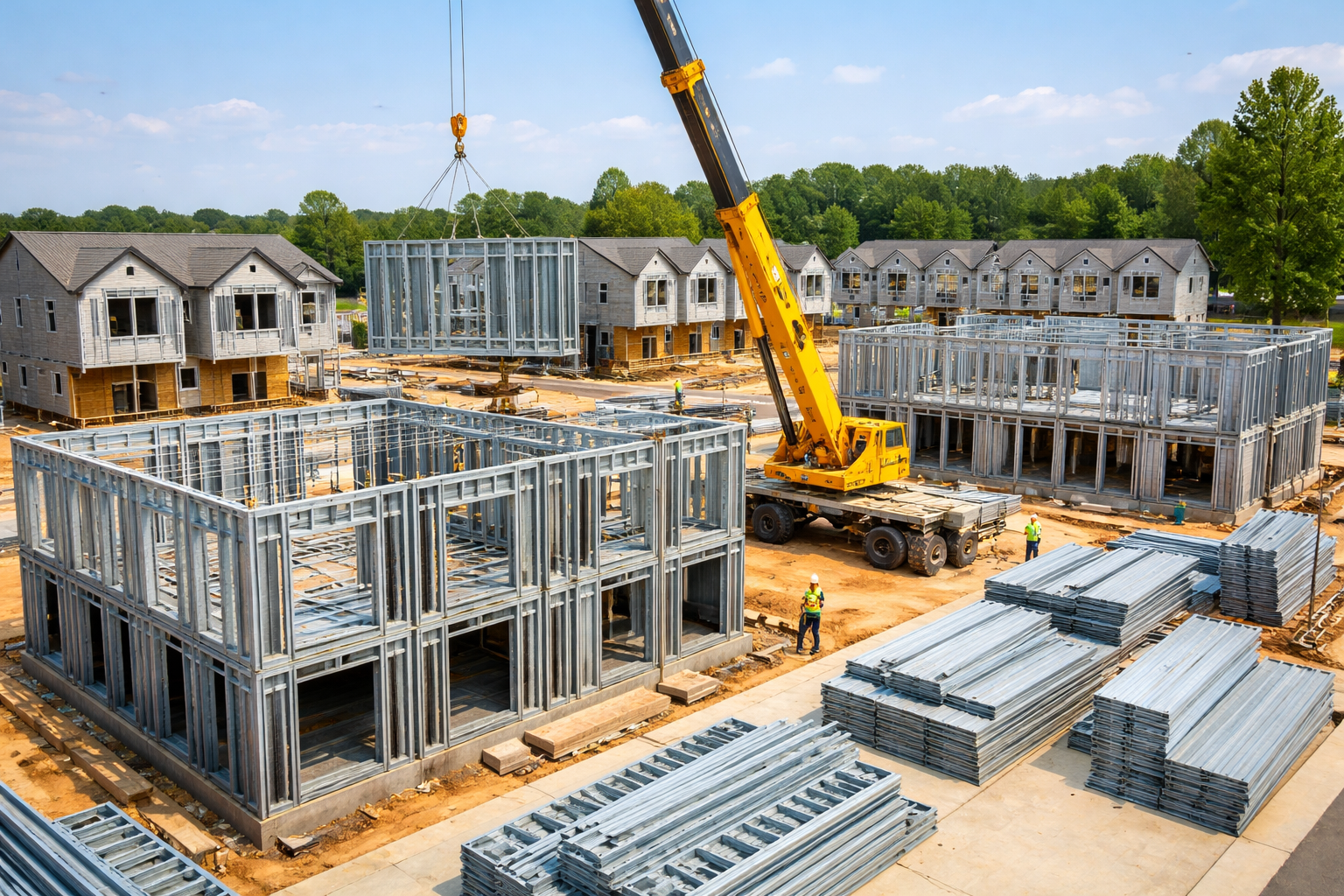
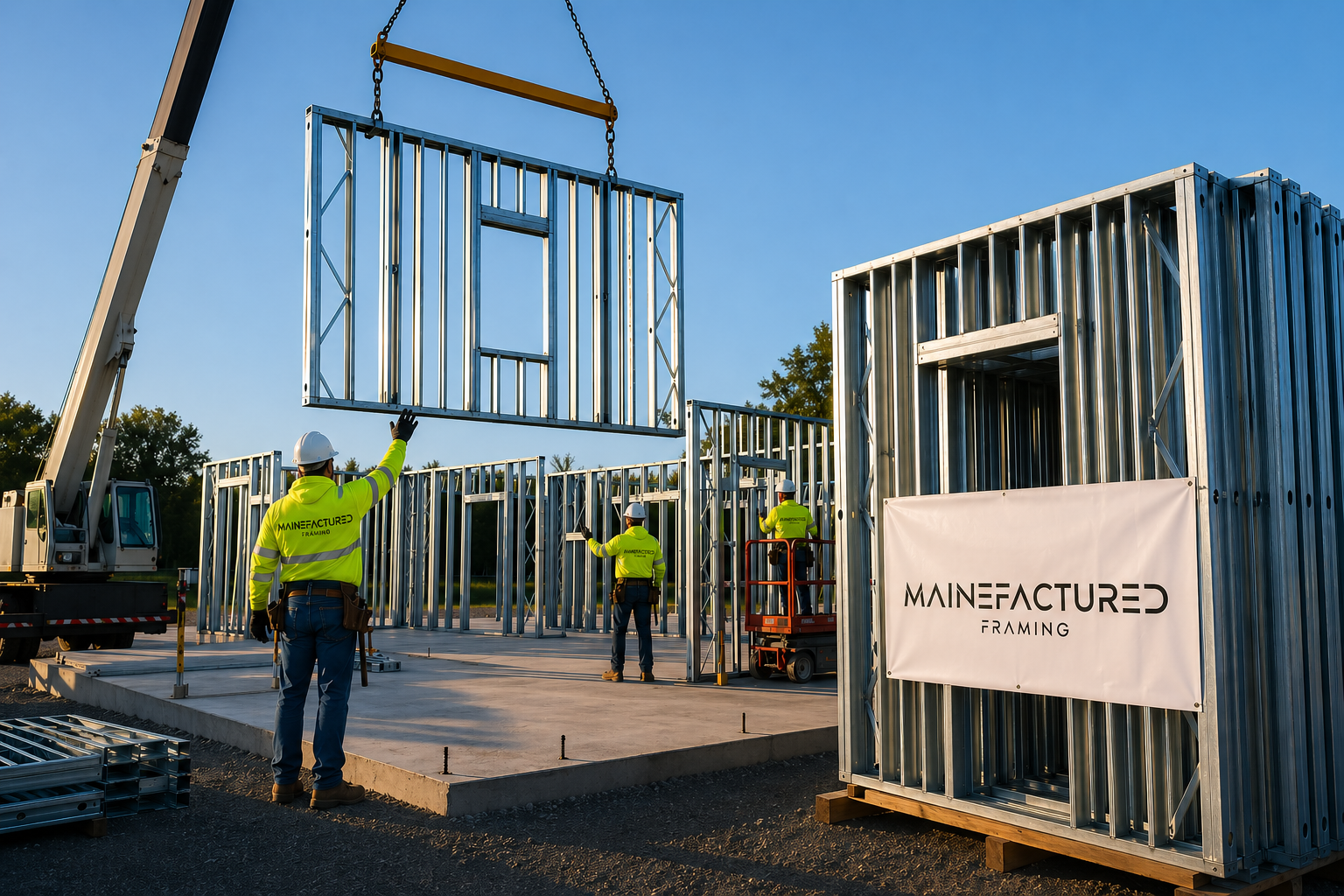
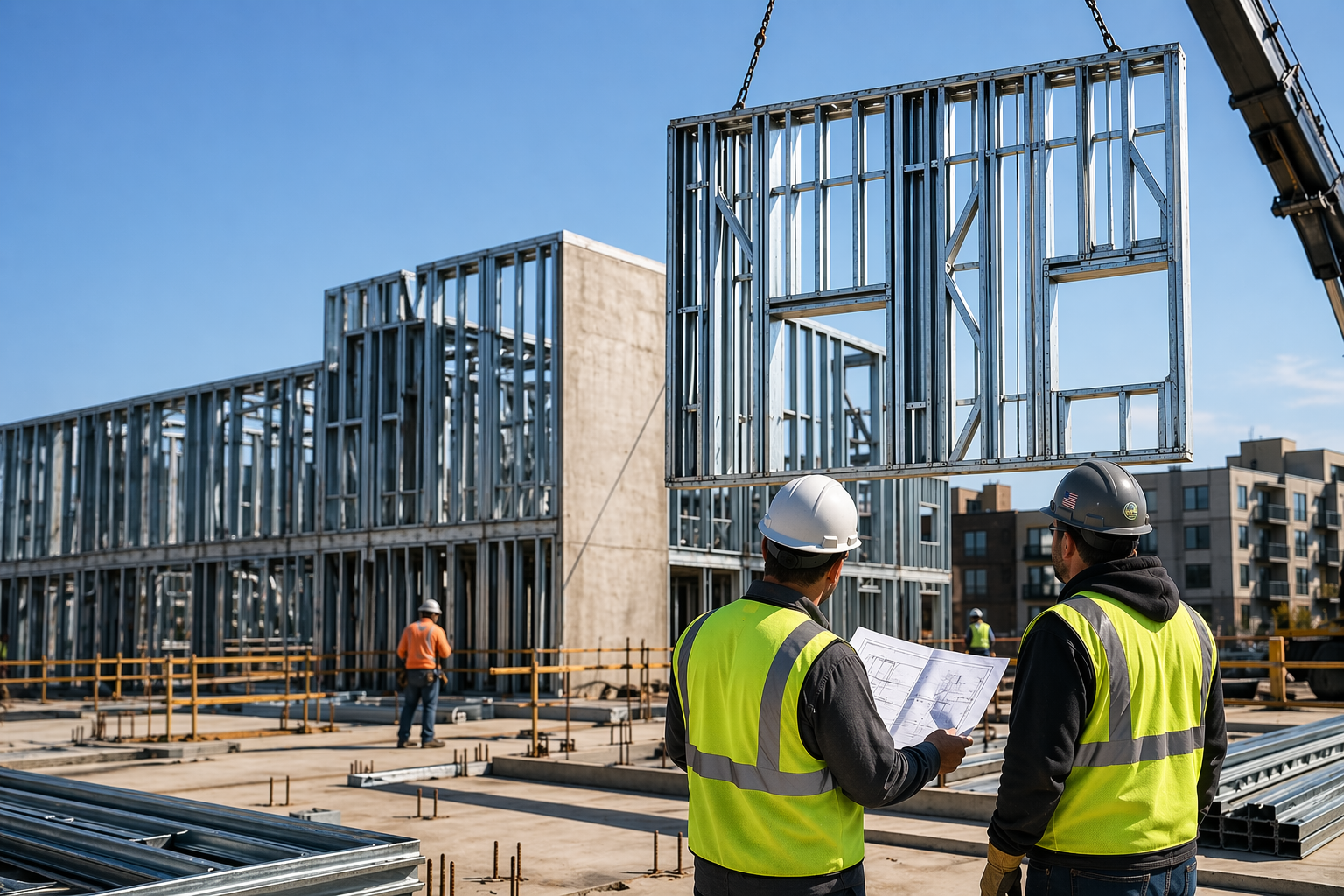
Panelized cold-formed steel framing is different. Wall panels, trusses, or floor assemblies may be fabricated off site, but they are installed as part of a conventional building project. The building is still permitted as a site-built structure unless the specific jurisdiction or project type introduces another classification.
That distinction is important.
A panelized CFS wall panel is not a finished room module. It is a preassembled framing component. The code review still focuses on the same core issues: structural design, fire-rated assemblies, energy compliance, exterior wall performance, lateral design, openings, load paths, fastening, and inspection access.
Panelization changes how the framing is fabricated and delivered. It does not automatically convert the project into a modular approval process.
Misconception 2: “The Inspector Will Not Know What to Look For”
Another concern is that inspectors may not be familiar with cold-formed steel framing.
In reality, many inspectors have experience with metal stud framing, especially in commercial and multifamily projects. The bigger issue is not unfamiliarity with steel. It is whether the inspection information is easy to verify in the field.
Inspectors need clear answers to practical questions:
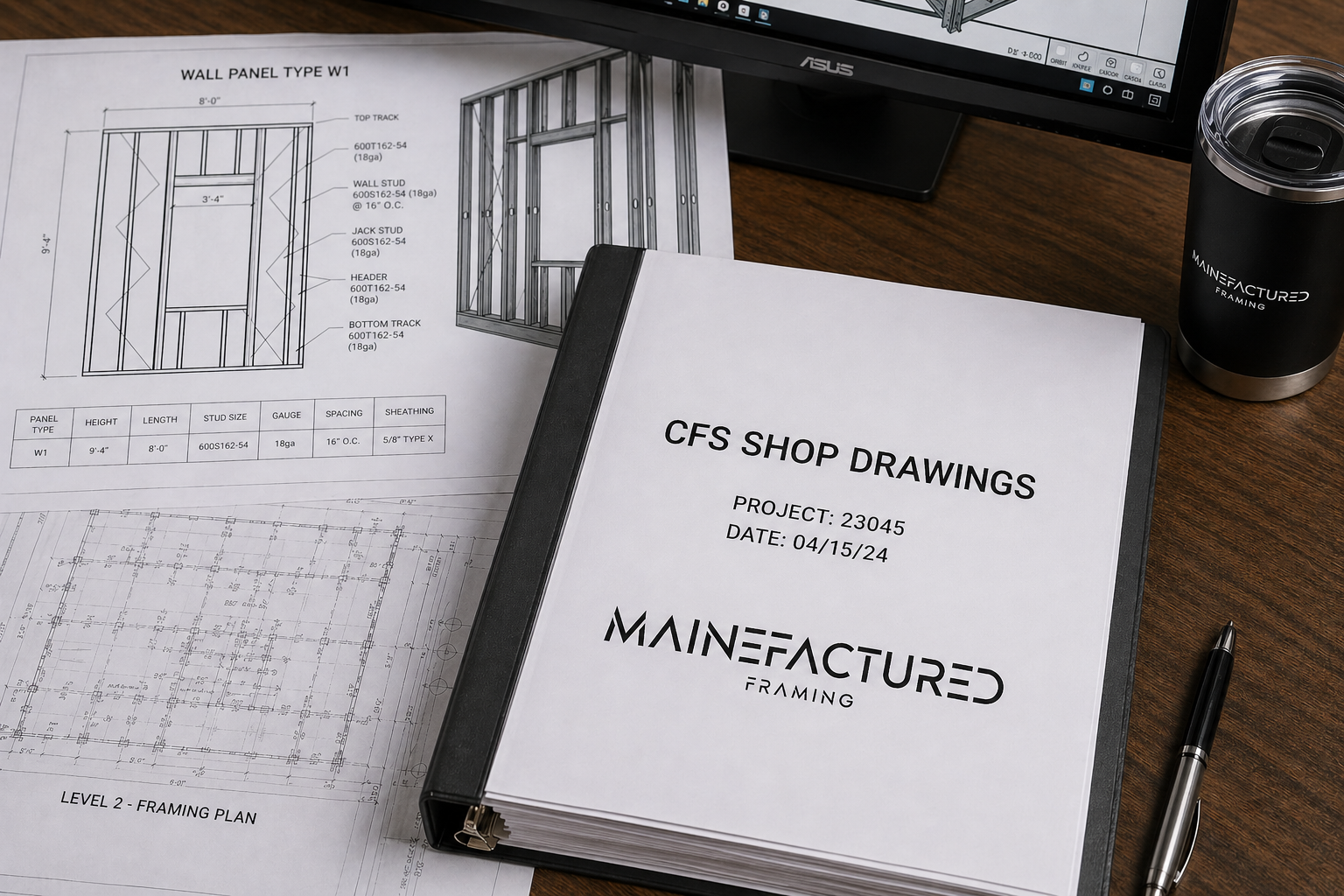
A well-organized panelized system can actually improve field verification when panels are labeled, shop drawings are coordinated, and member callouts are consistent with the approved documents.
The inspection process becomes more difficult when drawings are fragmented, field crews improvise, or design responsibilities are unclear.
Misconception 3: “Cold-Formed Steel Requires More Engineering Than Wood”
This misconception is partly true and partly misleading.
Cold-formed steel often requires more explicit engineering documentation than conventional prescriptive wood framing, especially in multifamily, hospitality, mixed-use, and other commercial-style projects. But those projects usually require significant engineering coordination regardless of framing material.
The difference is that CFS forces more framing decisions to be resolved earlier.
Stud gauge, spacing, jamb conditions, header design, lateral bracing, truss layout, connection details, deflection criteria, and load paths need to be coordinated before fabrication. That can feel more intensive during preconstruction, but it reduces ambiguity during installation.
This is one of the central advantages of an engineering-driven panelized CFS approach. Instead of relying heavily on jobsite interpretation, the framing package is built around a defined model, shop drawings, and fabrication-ready information.
That does not eliminate engineering effort. It moves the effort upstream, where it can be reviewed, priced, coordinated, and controlled.
Misconception 4: “Plan Review Will Take Longer”
Cold-formed steel does not automatically make plan review longer.
Plan review delays usually come from incomplete or inconsistent documentation, not from the material itself.
Common causes of delay include:
A clean CFS permit package should make the reviewer’s job easier, not harder. The goal is to show design intent clearly enough that the authority having jurisdiction can evaluate compliance without reconstructing the logic of the framing system.
For developers and GCs, this is where early involvement matters. If cold-formed steel is introduced only after the project has already been fully designed around another framing method, the team may need to unwind assumptions. If it is considered early, the drawings can be aligned before submission.
Misconception 5: “The Building Code Treats Steel Like a New Product”
Cold-formed steel framing is not new to the code environment.
The AISI standards framework includes structural framing standards, nonstructural member standards, prescriptive methods for certain one- and two-family dwellings, and related design standards. The BuildSteel standards committee listing includes AISI S202 for standard practice, AISI S220 for nonstructural members, AISI S230 for prescriptive one- and two-family dwelling framing, AISI S240 for structural framing, and AISI S250 for thermal transmittance of building envelopes with cold-formed steel framing.
For practical project delivery, this means CFS is not being justified through vague manufacturer claims. It must be designed and documented through recognized standards, project-specific engineering, and applicable code provisions.
That is an important distinction for owners.
A proprietary product may require special evidence, evaluation reports, or alternate means and methods depending on use. A properly designed cold-formed steel framing system is generally reviewed as part of the normal structural and architectural permit package.
What Actually Changes When You Use Cold-Formed Steel?
Cold-formed steel may not fundamentally change permitting, but it does change the level of coordination required before construction.
The most important shifts are practical.
1. Framing Becomes More Documented
Wood framing can sometimes absorb ambiguity in the field. Cold-formed steel should not be approached that way.
Panelized CFS works best when wall types, gauges, openings, load conditions, truss reactions, and connection details are resolved before manufacturing. This improves fabrication accuracy, but it also means unresolved design issues must surface earlier.
That is a feature, not a flaw.
Early decisions are usually less expensive than field corrections.
2. Delegated Design Must Be Clearly Defined
Many CFS projects involve delegated engineering for the framing system. That can work well, but the responsibility must be clearly defined in the permit documents and project specifications.
The design team should clarify:
- Who provides the cold-formed steel engineering?
- Which elements are delegated?
- What criteria must the delegated engineer follow?
- When will stamped shop drawings be submitted?
- How do delegated drawings coordinate with the engineer of record?
Ambiguity here is one of the fastest ways to create review comments, RFIs, or approval delays.
3. Fire, Sound, and Energy Assemblies Need Alignment
CFS framing intersects with multiple performance requirements.
A wall may be structural, fire-rated, sound-rated, part of the thermal envelope, and a substrate for cladding. Those requirements cannot be coordinated in isolation.
For example, a demising wall may need a tested fire-rated assembly, acoustic performance, specific gypsum layers, insulation, resilient channels, shaft conditions, or MEP penetration protection. An exterior wall may need structural sheathing, continuous insulation, WRB continuity, cladding attachment, and deflection coordination.
The framing system has to support the assembly strategy. It cannot be detailed after the fact.
What a Strong Permit Package Should Include
A permit-ready cold-formed steel framing package should be easy to understand by the architect, engineer, GC, reviewer, and inspector.
At minimum, the project team should align the following:
The goal is not to overwhelm the reviewer with more paper. The goal is to make the project logic clear.
When CFS Can Actually Reduce Approval Risk
Cold-formed steel can reduce risk when it is used as part of a coordinated system rather than introduced as a late substitution.
This is especially true for repeatable project types such as multifamily, hotels, build-to-rent communities, student housing, senior housing, and mixed-use developments. These projects often have repeated unit layouts, corridor conditions, demising walls, exterior wall types, and roof or floor assemblies.
When the same conditions repeat across a project, the value of early coordination increases.
A panelized CFS approach allows teams to standardize conditions, identify conflicts earlier, and reduce field variability. Mainefactured Framing often sees the strongest project logic when framing is treated as an upstream execution decision rather than a commodity bid package issued after design assumptions have already been locked.
That does not mean every project should use CFS. It means the permitting conversation should be grounded in scope, documentation, and project risk, not misconceptions.
The Real Risk: Late Conversion Without Coordination
The biggest permitting challenge is not cold-formed steel itself. It is converting to cold-formed steel too late.
Late conversion can affect:
- Structural assumptions
- Wall thicknesses
- Shaft details
- Rated assemblies
- Exterior wall build-ups
- Truss reactions
- MEP penetrations
- Anchor layouts
- Architectural dimensions
- Coordination with cladding and sheathing
When a project is designed around wood and later switched to steel, the team must review whether the original drawings still make sense. Sometimes the conversion is straightforward. Sometimes it requires meaningful redesign.
That is why developers and GCs should involve the framing partner before permit submission when possible. Early review allows the team to identify whether CFS is a clean fit, where value engineering is realistic, and which details need to be resolved before drawings are issued.
Common Questions from Owners and GCs
Does cold-formed steel require a separate permit?
Usually, no. In most site-built projects, CFS is reviewed as part of the normal building permit package. The project still needs proper structural documents, details, product information, and any required delegated engineering.
Will the authority having jurisdiction reject CFS because it is not wood?
A jurisdiction may ask questions about any framing system if the documents are incomplete. But cold-formed steel itself is a recognized construction method. The approval issue is documentation and compliance, not whether the material is inherently unacceptable.
Is panelized CFS treated like modular construction?
Not typically. Panelized framing components are different from volumetric modular units. Unless a specific jurisdiction or project structure classifies the work differently, panelized CFS is generally part of a conventional site-built permit approach.
Are inspections harder with CFS?
They can be easier when the framing is labeled, documented, and installed according to coordinated drawings. Inspections become harder when field crews deviate from details or when the approved documents do not clearly show the framing system.
Should CFS be discussed before permit submission?
Yes, whenever possible. Early involvement gives the design team time to align framing, structural engineering, fire assemblies, exterior wall details, and fabrication requirements before the permit set is finalized.
Conclusion: CFS Does Not Change the Rules, But It Raises the Standard for Coordination
Cold-formed steel framing does not usually create a new permitting path or code approval problem. It is a recognized framing method supported by established design standards and familiar to many commercial and multifamily construction environments.
The misconception is that CFS creates approval risk simply because it is different from wood.
In reality, the risk comes from late decisions, unclear responsibility, incomplete details, and poor coordination between architectural, structural, fire, energy, and fabrication requirements.
For developers, architects, and GCs, the right approach is straightforward: treat cold-formed steel as an engineered framing system that should be coordinated early, documented clearly, and reviewed as part of the overall building strategy.
When that happens, permitting is not the obstacle. It becomes one more place where disciplined preconstruction reduces uncertainty before work reaches the field.
Related posts
SEE ALL POSTSDoes Cold-Formed Steel Change Permitting or Code Approval? Common Misconceptions Explained
How Inspections Work with Panelized Cold-Formed Steel Framing