
Panelized Metal Framing and Schedule Certainty
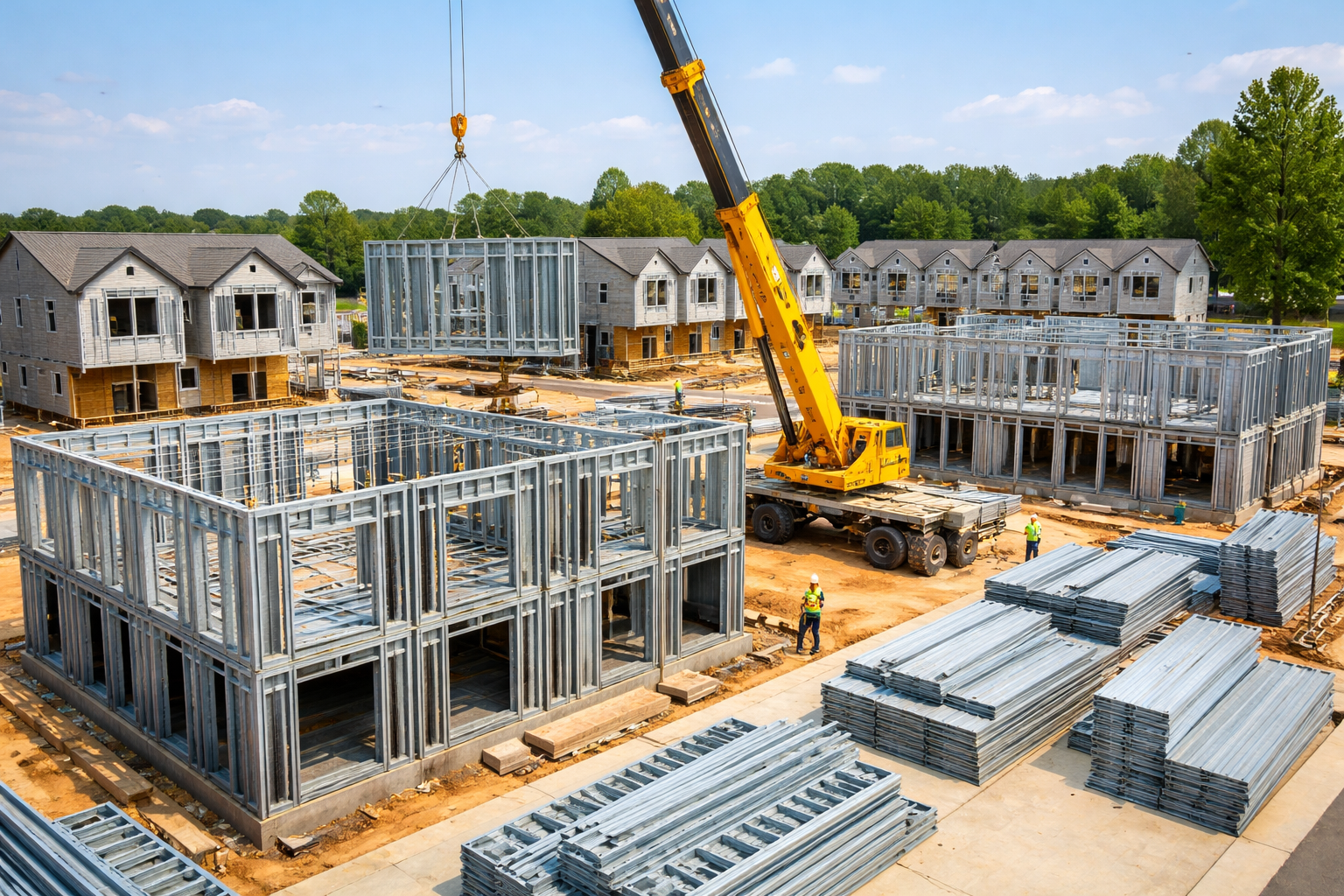
Schedule certainty has become one of the most fragile variables in residential and light-commercial construction. Labor shortages, weather volatility, and material inconsistency have made traditional framing timelines increasingly difficult to predict. For developers and general contractors, even small schedule slips now translate directly into higher financing costs, delayed lease-up, and increased project risk.
In response, more project teams are rethinking how framing fits into the critical path. Rather than treating framing as a purely on-site activity, they are turning to panelized metal framing as a way to shift uncertainty out of the field and into a controlled production environment. By leveraging cold-formed steel systems fabricated offsite, developers and GCs are gaining tighter control over schedules without fundamentally changing how projects are delivered.
What Is Panelized Metal Framing?
Panelized metal framing is a construction approach where wall, floor, and roof assemblies are fabricated offsite using cold-formed steel (CFS), also known as light gauge steel (LGS). These panels are engineered, manufactured, and quality-checked in a factory setting, then shipped to the jobsite for rapid installation.
Unlike traditional stick framing, panelized systems arrive as pre-assembled components rather than loose materials. Unlike modular construction, panelized framing does not deliver volumetric units and does not impose modular constraints on architectural design. Panels integrate into conventional construction workflows while removing a significant portion of labor-intensive framing work from the jobsite.
The Many Benefits of Metal Framing
Cold-formed steel framing offers several well-established advantages across residential and light-commercial construction, including dimensional accuracy, consistent quality, fire resistance, durability, and reduced long-term maintenance. Steel framing also minimizes issues related to shrinkage, warping, and callbacks that commonly affect wood-framed structures.
While all of these benefits matter, this article focuses specifically on schedule certainty, which is often the most financially consequential variable for developers and general contractors. Schedule risk compounds quickly, affecting financing carry, sequencing of trades, and delivery commitments. Panelized metal framing addresses these risks directly.
Quick Answer for Developers and GCs
- Panelized metal framing improves schedule certainty by shifting framing labor from the jobsite to a controlled manufacturing environment.
- Cold-formed steel panels reduce weather-related delays because fabrication occurs independently of site conditions.
- Panelized assemblies install faster and more predictably than stick framing due to tighter tolerances and pre-coordination.
- Schedule compression is achieved by overlapping offsite fabrication with early site and foundation work.
- The schedule benefits are most pronounced on repeatable, multi-building projects with tight delivery timelines.
Where Schedule Risk Comes From in Traditional Stick Framing
Understanding why schedules slip helps clarify why panelization changes the equation.
Labor Variability
Stick framing depends heavily on skilled labor performing repetitive tasks on site. Productivity fluctuates based on crew experience, weather, and site logistics. When framing crews fall behind, downstream trades are immediately impacted.
Weather Exposure
Wood framing is highly sensitive to rain, snow, and temperature swings. Weather events routinely interrupt production, slow inspections, and introduce moisture-related issues that require remediation.
Material Inconsistency
Wood framing materials vary in straightness, moisture content, and dimensional stability. These inconsistencies accumulate as buildings go vertical, increasing layout time and rework.
Trade Stacking
Framing sits directly on the critical path. Delays during framing cascade into MEP rough-ins, inspections, drywall, and finishes, amplifying even minor schedule disruptions.
How Panelized Metal Framing Improves Schedule Certainty
Parallel Fabrication and Site Work
Offsite fabrication allows framing production to occur while foundations and site work are underway. This parallelization removes weeks from the critical path rather than compressing activities into a single phase.
Faster and More Predictable Installation
Panels arrive labeled, sequenced, and ready for installation. Crews focus on assembly rather than cutting, correcting, or improvising in the field, resulting in consistent production rates.
Reduced Weather Dependency
Steel framing is not affected by moisture in the same way wood is, and fabrication occurs indoors. This significantly reduces weather-related downtime during the framing phase.
Improved Trade Coordination
Cold-formed steel panels are produced to tight tolerances and coordinated with structural and MEP requirements. This improves inspection outcomes and accelerates follow-on trades.
Panelized Metal Framing vs. Stick Framing
From a schedule and predictability standpoint, the differences are material.
Stick Framing
- Sequential, site-dependent workflow
- High exposure to labor and weather variability
- Inconsistent production rates
- Greater risk of cascading delays
Panelized Metal Framing
- Parallel fabrication and site work
- Controlled production environment
- Predictable installation sequencing
- Reduced critical-path uncertainty
For developers, the value is not just speed, but confidence in delivery dates tied to financing and occupancy milestones.
Ideal Applications for Panelized Metal Framing
While panelized metal framing can be used across many project types, it delivers the greatest schedule value in applications where repeatability and predictability matter most.
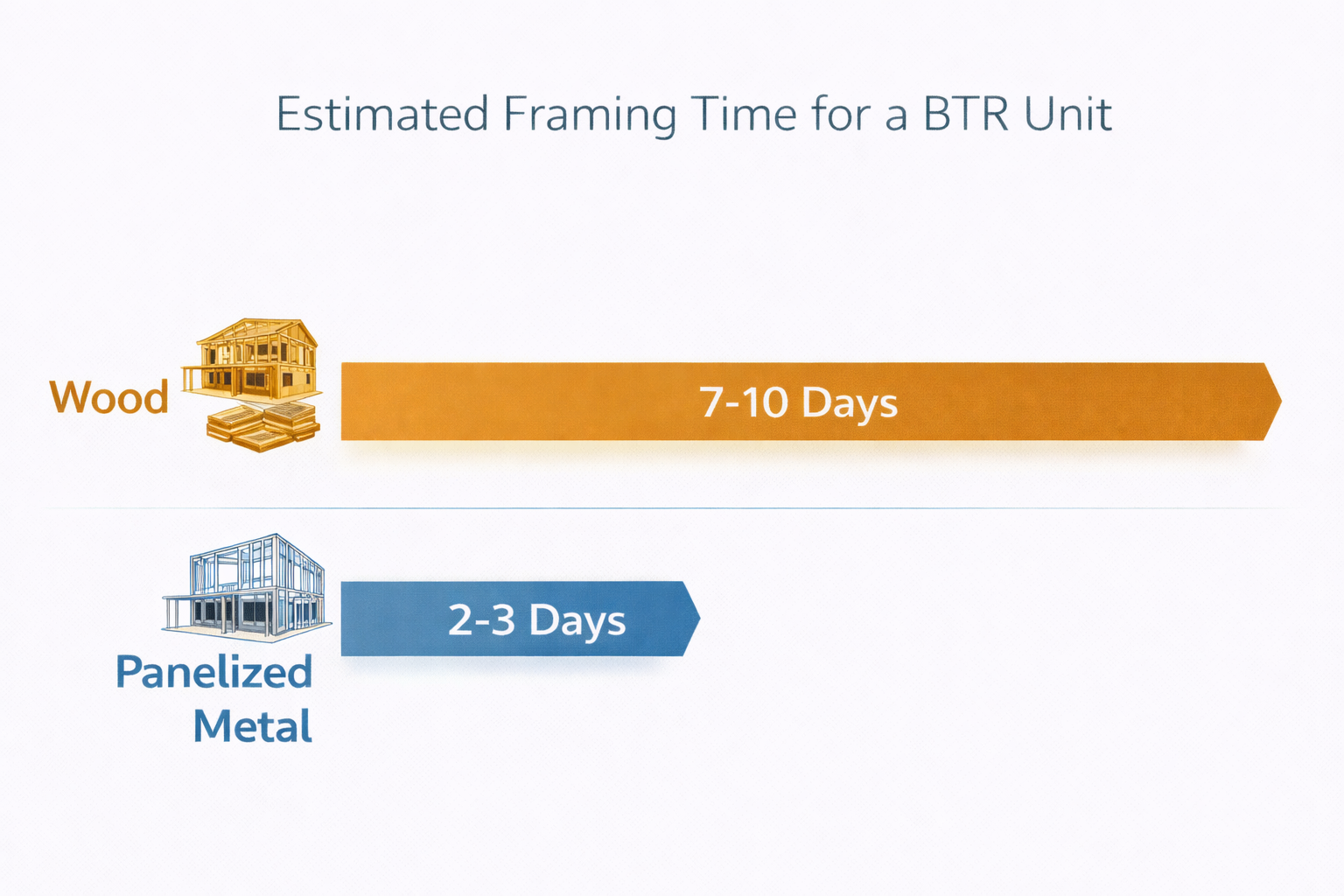
- Built-to-Rent Communities
Repeatable unit designs, phased delivery, and financing sensitivity make built-to-rent developments especially well-suited to panelized steel framing. - Multi-Family Residential Developments
Consistent unit layouts allow fabrication efficiencies and rapid vertical progression. - Mixed-Use and Podium Projects
Tight urban sites and complex coordination benefit from reduced on-site framing duration. - Hospitality and Light Commercial
Schedule-driven openings and standardized layouts align well with panelized systems. - Custom Homes with Aggressive Schedules
Projects prioritizing speed and quality over traditional sequencing see meaningful benefits.
Key Takeaways for Developers and GCs
Panelized metal framing is best understood as a schedule-risk management strategy, not just a framing alternative. By shifting labor offsite, reducing weather exposure, and improving predictability, cold-formed steel panelization gives project teams greater control over the critical path.
For developers and general contractors operating in labor-constrained markets or managing multi-building deliveries, schedule certainty often delivers greater ROI than marginal differences in material cost. Mainefactured Framing brings practical experience in panelized steel systems, helping teams align design, fabrication, and installation around predictable outcomes.
Related posts
SEE ALL POSTS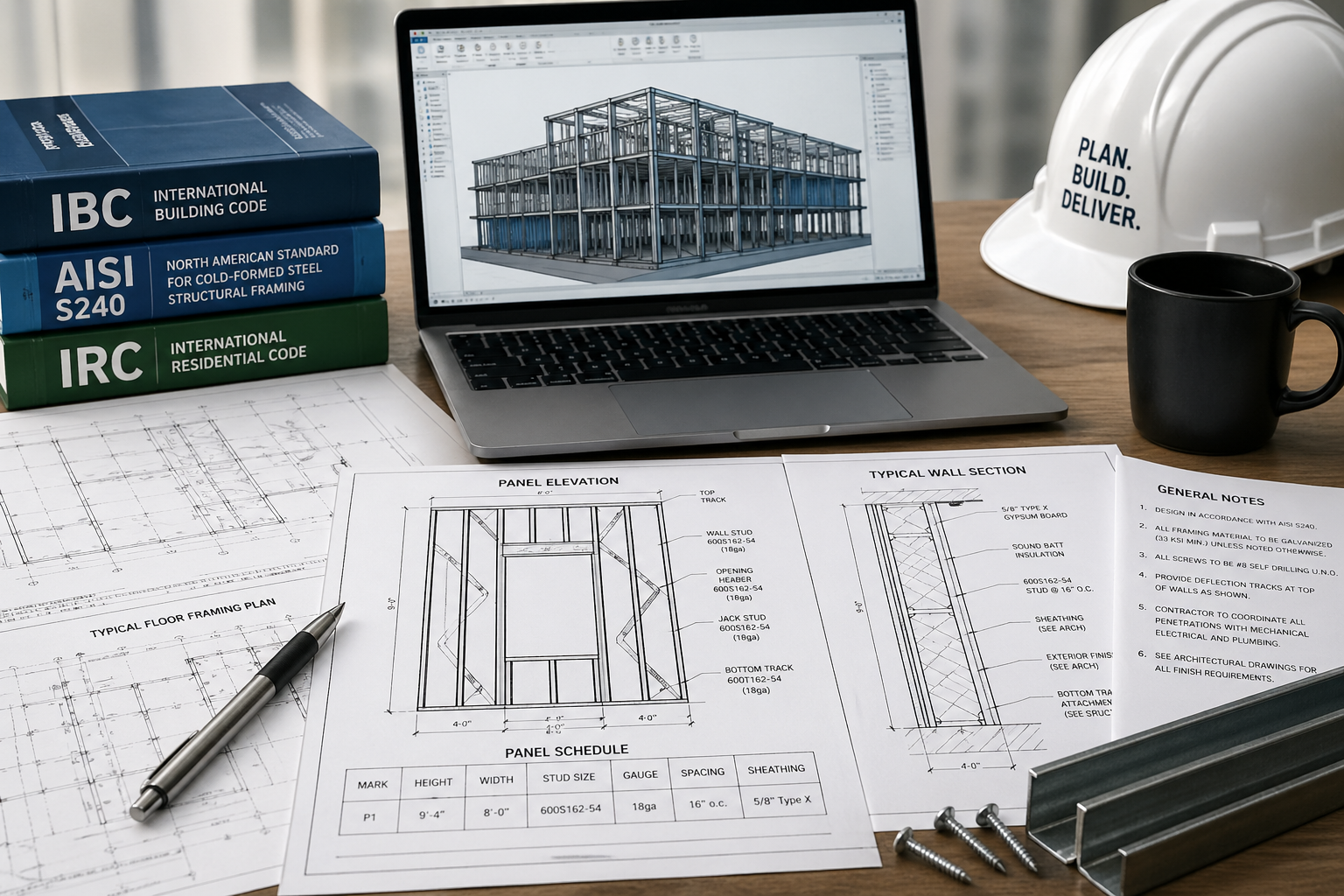
Does Cold-Formed Steel Change Permitting or Code Approval? Common Misconceptions Explained
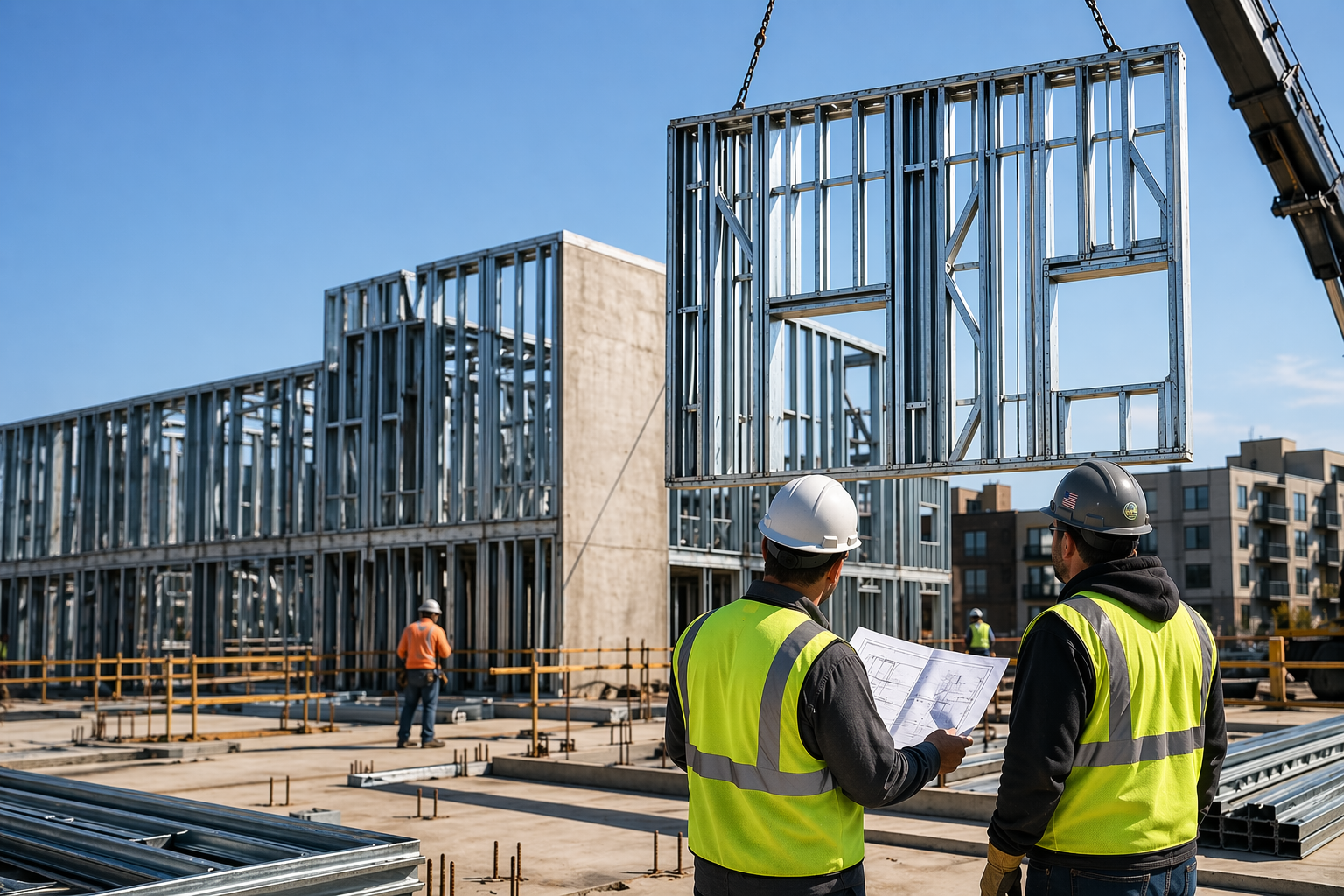
How Inspections Work with Panelized Cold-Formed Steel Framing