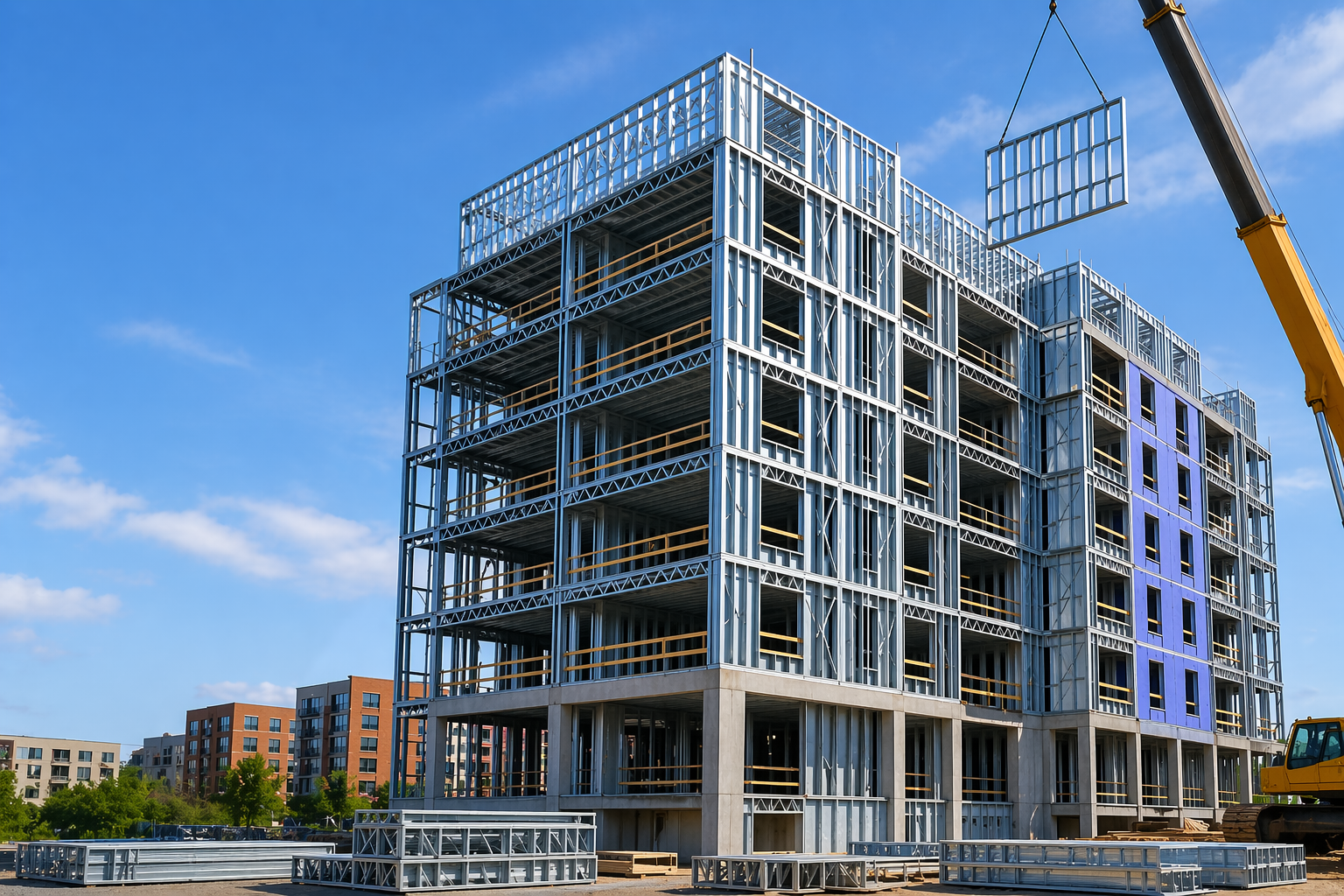
Cold-Formed Steel Framing for Self-Storage and Flex Industrial Projects: A Developer’s Guide
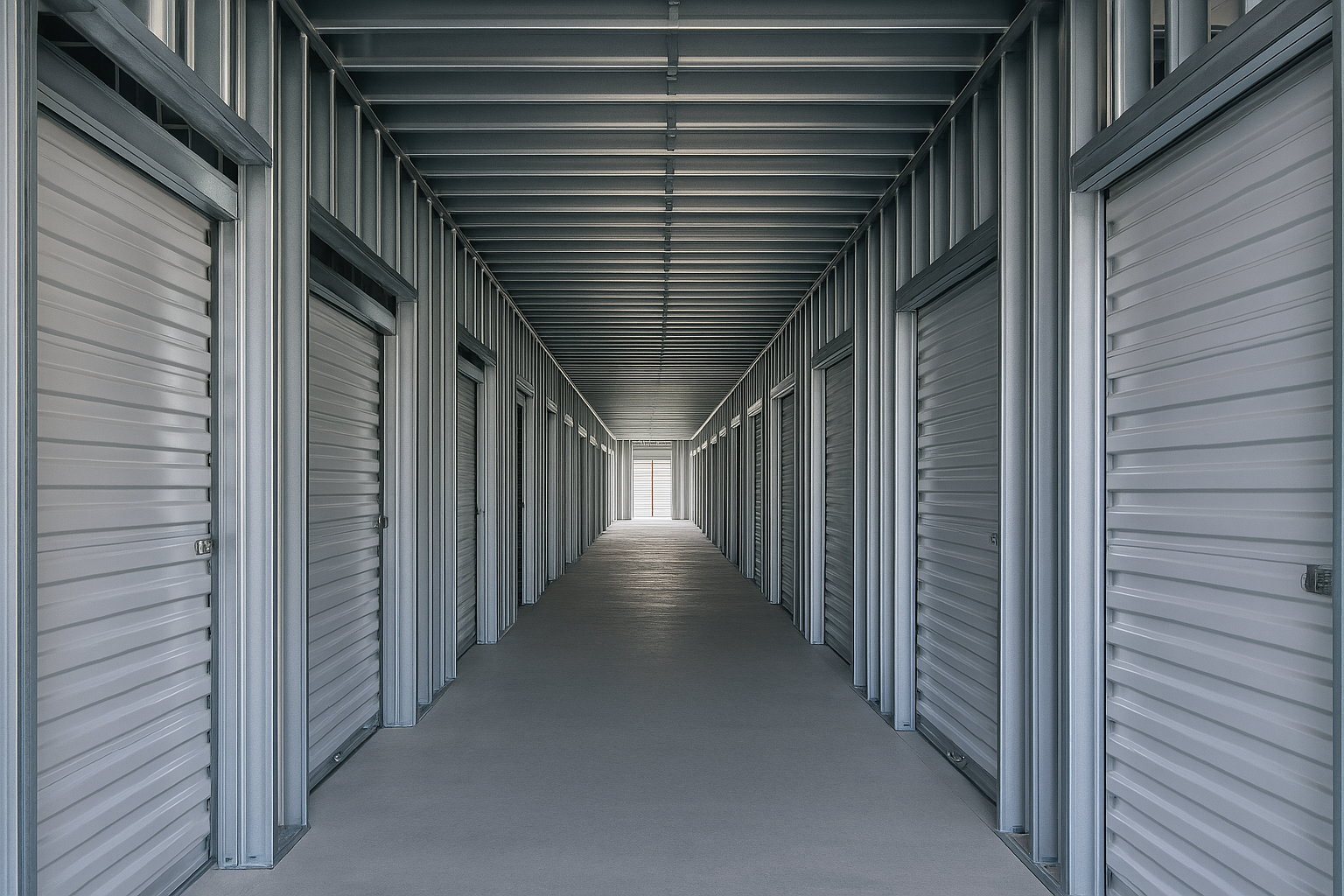
Self-storage and flex industrial buildings are some of the most deceptively simple projects in a developer’s portfolio. On paper, they’re “just” long corridors, repetitive units, and big open bays. In reality, they live or die by how well you control cost per square foot, how quickly you can get them online, and how little maintenance they require over the next 20–30 years.
That combination—speed, efficiency, and durability—is precisely where cold-formed steel framing and panelized systems excel. While cold-formed steel has already made a name for itself in multifamily and mixed-use, it is an equally powerful, and sometimes underutilized, solution for self-storage facilities and flex industrial buildings.
This guide walks through why cold-formed steel should be on the short list for your next self-storage or flex project, and how it compares to wood framing and conventional red iron systems.
Why Self-Storage and Flex Industrial Are Perfect Fits for Cold-Formed Steel
Self-storage and flex industrial share three key characteristics:
- Highly repetitive layouts
- Strong sensitivity to schedule and cost overruns
- Need for durable, low-maintenance structural systems
Most buildings in these categories are not about luxury finishes or architectural drama—they’re about maximizing rentable or leasable area, delivering quickly, and avoiding surprises during operation.
Cold-formed steel framing aligns with those priorities because it offers:
- Consistent, repeatable panelized wall systems
- Long-span roof and floor solutions using CFS trusses and joists
- Non-combustible assemblies that age well and perform predictably
Instead of relying on inconsistent lumber or overbuilt red iron systems, developers can choose a solution that is engineered to match the actual structural demands of the building—nothing more and nothing less.
Cold-Formed Steel vs. Wood Framing in Self-Storage
Wood framing is often used on smaller, single-story storage projects, but it brings familiar risks and limitations that become more pronounced as sites get tighter and buildings get taller.
Wood introduces:
- Movement and shrinkage that can impact door alignment and finishes
- Greater vulnerability to moisture and pests
- Higher insurance sensitivities for facilities full of tenant belongings
- A heavier reliance on field labor and variable crew quality
Cold-formed steel framing, by contrast, is:
- Dimensionally stable – it doesn’t shrink, warp, or twist over time
- Non-combustible – a meaningful advantage in insurance conversations
- Highly repeatable – panelized wall lines can be produced efficiently and consistently
- Better for long corridors and stacked layouts – it holds true over long runs and multiple levels
For a typical multi-story self-storage site, the ability to stack levels using cold-formed steel shear walls, corridor walls, and truss systems can simplify design and reduce the risk of long-term performance issues.
Cold-Formed Steel vs. Red Iron in Flex Industrial
On the other end of the spectrum, many flex industrial projects default to red iron structural steel. Red iron is excellent for very large clear spans, heavy loads, and tall structures—but in many cases, flex industrial buildings don’t need that level of overspecification.
Cold-formed steel framing can provide:
- Wall and roof systems that meet structural requirements with less weight
- Easier integration of mezzanines, demising walls, and future tenant build-outs
- Panelized wall lines that go up quickly with smaller crews
- Better coordination around fenestration, overhead doors, and storefronts
Red iron may still make sense for certain large-bay or heavy-load projects. But for light industrial, flex office/warehouse, and smaller-bay multi-tenant buildings, cold-formed steel offers a more surgical use of material and labor.
Panelized CFS Systems: Speed and Predictability for Repetitive Layouts
One of the biggest advantages cold-formed steel brings to self-storage and flex industrial is panelization. These building types are inherently repetitive: similar bays, similar corridors, similar unit mixes.
That repetition is ideal for:
- Standardizing wall panel designs
- Reusing truss and joist profiles across large swaths of the building
- Streamlining engineering and fabrication
With a panelized system:
- Structural design is driven by CAD/BIM rather than hand layout.
- Wall lines and trusses are fabricated off-site under controlled conditions.
- Panels are labeled, delivered in sequence, and installed quickly on site.
For a self-storage project with long corridors and stacked units, this means you can build faster and with tighter tolerances. For a flex industrial building, it means wall lines, openings, and mezzanine supports are repeatable and well-coordinated.
Schedule and Labor Benefits for Developers and GCs
Every additional week spent in framing adds cost. Self-storage and flex industrial pro formas often assume aggressive lease-up timelines; any schedule slip eats directly into returns.
Cold-formed steel and panelized framing help by:
- Reducing the amount of cutting and fitting required onsite
- Lowering dependency on large framing crews
- Making it easier to sequence framing with slab work, MEP rough-in, and exterior skin installation
- Allowing certain framing elements to be built in parallel with site work
When crews are setting pre-engineered wall panels and trusses rather than stick-building in the field, the margin for error shrinks and the pace becomes more predictable. That level of reliability can be especially valuable in markets where self-storage and light industrial are experiencing competitive pressure and compressed timelines.
Thermal, Corrosion, and Envelope Considerations
Self-storage and flex industrial buildings often prioritize basic thermal control and durability over high-end aesthetics. Even so, envelope performance matters—especially as energy codes continue to tighten.
Cold-formed steel framing integrates well with:
- Continuous insulation systems on the exterior
- Modern air- and water-resistive barriers
- Properly detailed thermal breaks to manage bridging
With appropriate coating specifications and detailing, CFS can deliver a long service life, particularly when buildings are partially conditioned or climate-controlled (as is increasingly common in self-storage).
In flex industrial, where tenant needs may evolve over time, cold-formed steel’s durability and flexibility for future modifications become additional advantages.
Cost Perspective: Where CFS Creates Value in Self-Storage and Flex
For these project types, cost is not simply about the price per stud or per pound of steel. It’s about:
- How quickly the building can become revenue-generating
- How predictable the framing package is from estimate to completion
- How much risk is carried in labor, waste, and rework
- How the structure will perform over its full life cycle
Cold-formed steel framing often creates value by:
- Lowering rework and punch-list items
- Reducing unexpected framing-related delays
- Minimizing callbacks related to movement and finish cracking
- Streamlining unit reconfigurations or build-outs over the building’s life
Developers who evaluate self-storage or flex projects on total delivered cost and long-term risk, rather than pure material pricing, increasingly see cold-formed steel as a strategic choice rather than a premium option.
How a CFS Partner Fits Into the Development Process
For developers and GCs, the key is not just choosing cold-formed steel, but choosing how to implement it. An experienced CFS partner can:
- Review preliminary site plans and feasibility concepts
- Advise when CFS is a good fit versus red iron or hybrid systems
- Provide design-assist input to simplify wall lines and roof structures
- Engineer and fabricate panelized wall systems, trusses, and joists
- Coordinate framing with overhead doors, corridors, and mezzanines
That level of collaboration is especially valuable early in design, when decisions about layout, grid spacing, and lateral systems can significantly influence cost and constructability.
Related posts
SEE ALL POSTS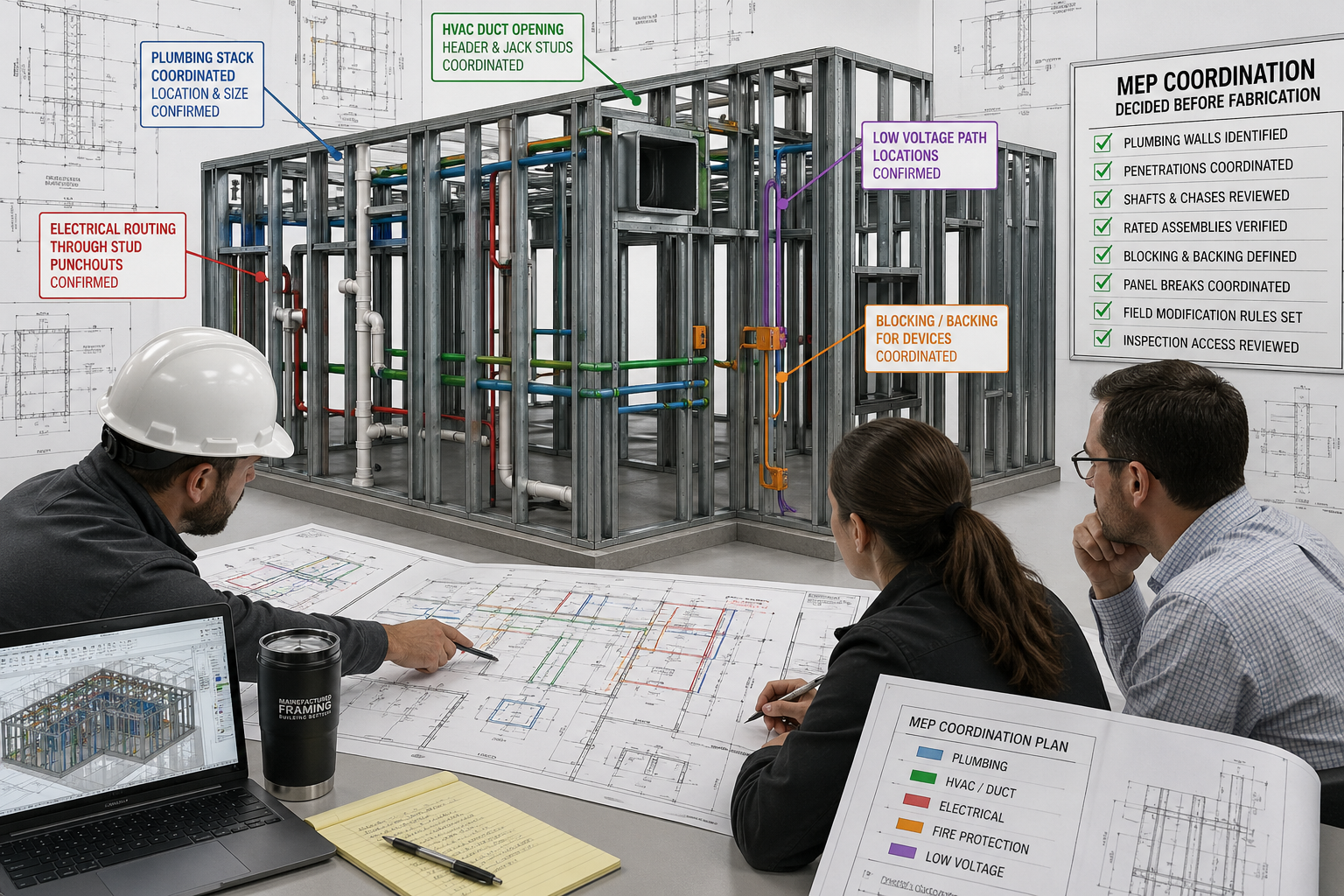
MEP Coordination in Panelized Cold-Formed Steel: What Must Be Decided Before Fabrication
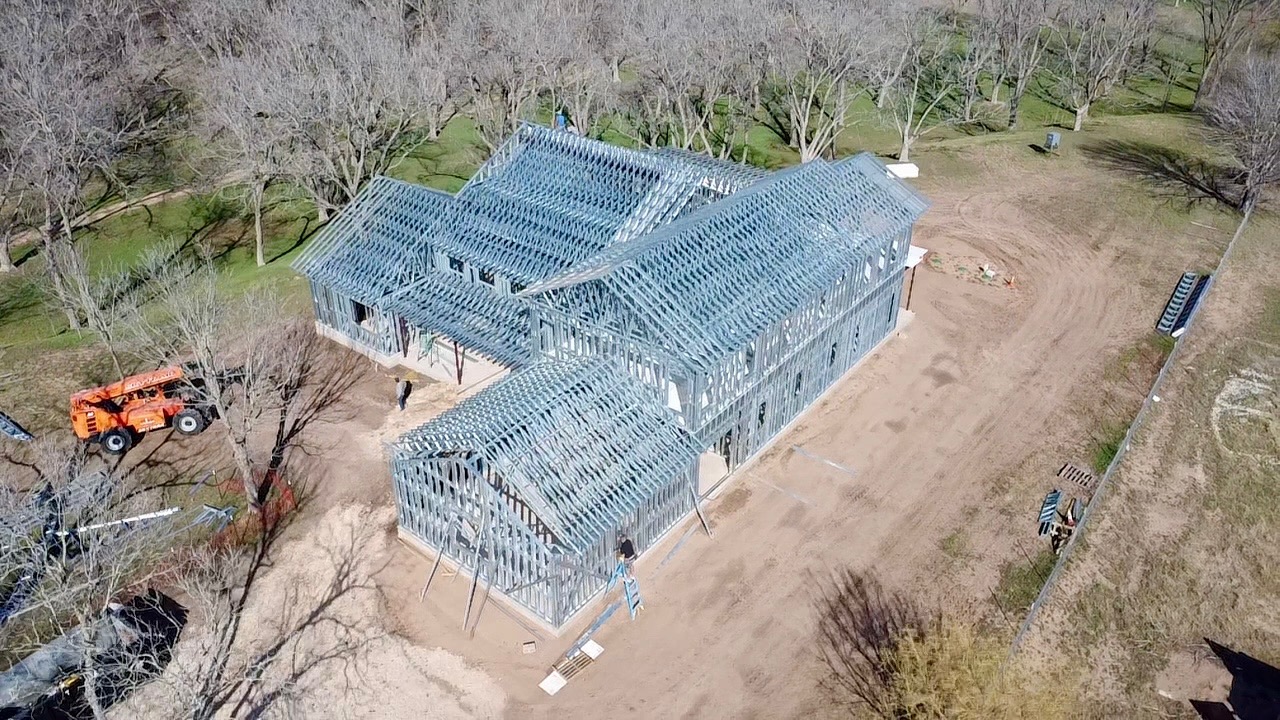
Cold-Formed Steel for Custom Homes: What High-End Builders Need to Know