Cold-Formed Steel for Custom Homes: What High-End Builders Need to Know
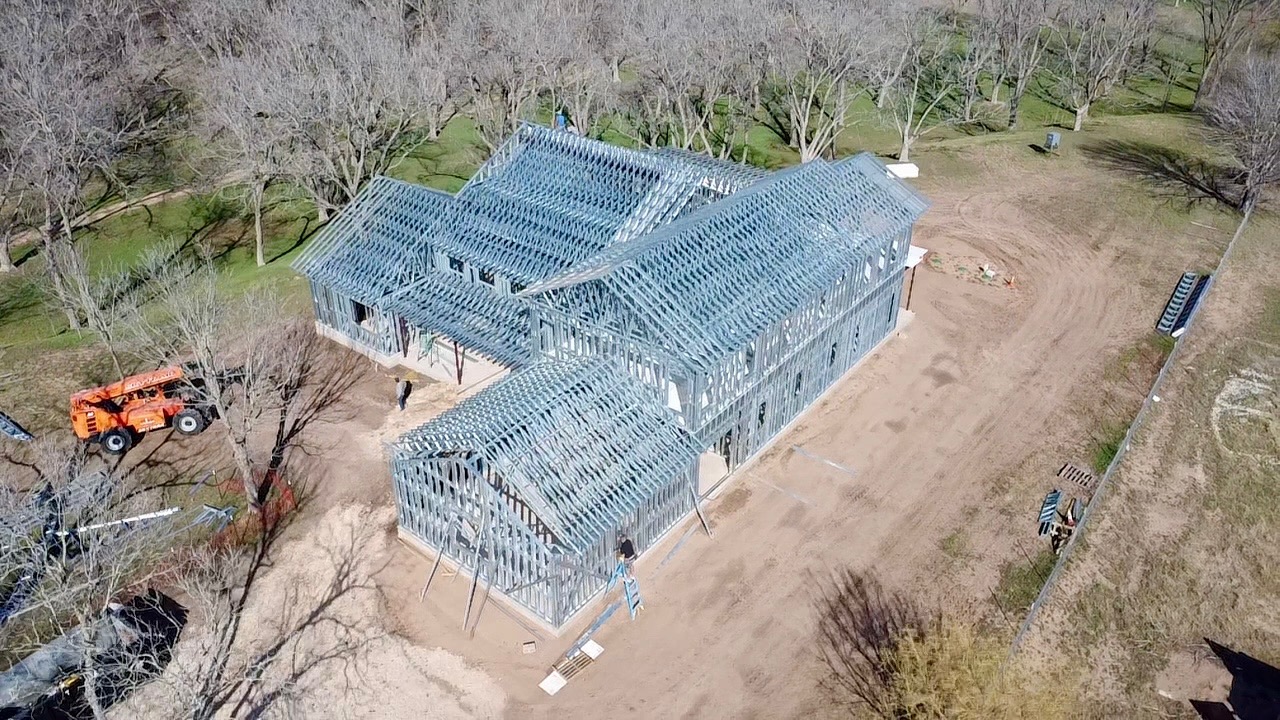
Custom homes are not production houses with better finishes. They are often complex, design-intensive structures where framing decisions affect everything downstream: window alignment, wall flatness, cabinetry, cladding transitions, roof geometry, MEP routing, finish tolerances, and long-term performance.
For high-end builders, the framing package is not just a commodity trade. It is the skeleton that determines how cleanly the rest of the project comes together.
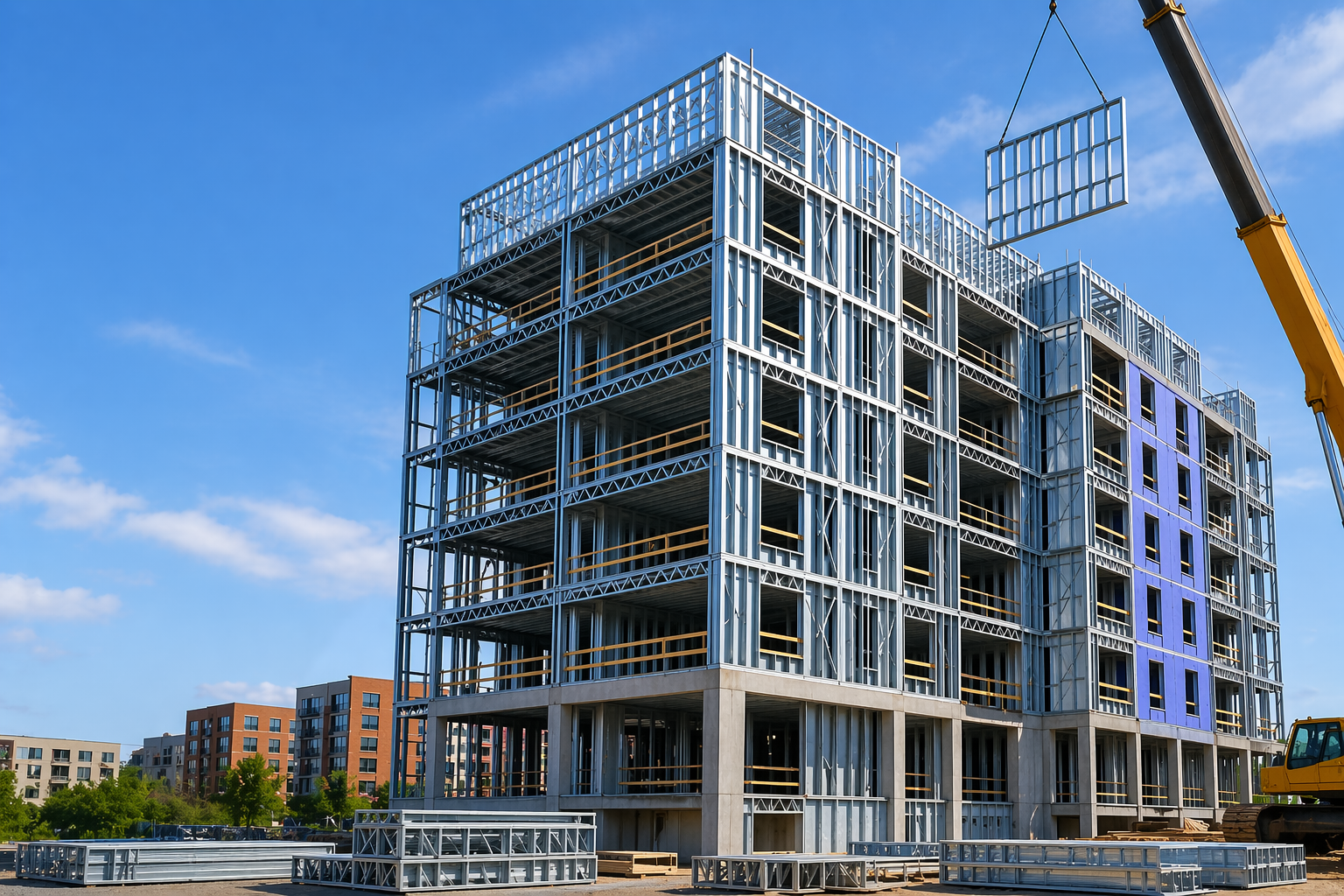
That is why cold formed steel framing is starting to receive more attention in the custom home market. While it has long been associated with commercial buildings, multifamily projects, hotels, and noncombustible construction, the same qualities that make it valuable in those environments can also matter in luxury residential work.
The question is not whether cold-formed steel is “better” than wood in every situation. It is not. The better question is where the attributes of steel create enough value to justify the additional planning, engineering, and coordination required.
For custom builders working on architecturally demanding homes, the answer is increasingly worth examining.
Why Custom Homes Create a Different Framing Problem
In conventional residential construction, wood framing often works because the geometry is familiar, the assemblies are repetitive, and field decisions can solve many issues as they arise.
High-end custom homes are different.
They may include long spans, tall walls, large glass openings, cantilevers, complex rooflines, high wind exposure, modern exterior cladding systems, tight interior finish tolerances, and demanding owner expectations. The framing package has to support not only gravity and lateral loads, but also architectural intent.
That means the cost of framing error is higher.
A slightly bowed wall can become a cabinetry issue. A misaligned opening can affect window lead times. A poorly coordinated shear condition can disrupt interior layouts. A late structural clarification can delay multiple trades.
Cold formed steel framing changes the framing discussion because it forces more decisions upstream. The system depends on coordinated drawings, engineering, shop drawings, fabrication logic, panel sequencing, and installation planning. That can feel like added complexity at first. On the right project, it is also where much of the value comes from.
Where Cold Formed Steel Framing Fits Best in Custom Homes
Cold-formed steel does not need to replace every wood-framed custom home. It is most compelling where the project has complexity, risk, or performance requirements that make dimensional accuracy and preplanning more valuable.
Common use cases include:
The key is not simply using steel. The value comes from using steel as a coordinated framing system.
Steel Is Not Just a Material Change
One mistake builders sometimes make is treating cold-formed steel as a direct substitute for wood. That misses the point.
Steel framing affects the process.
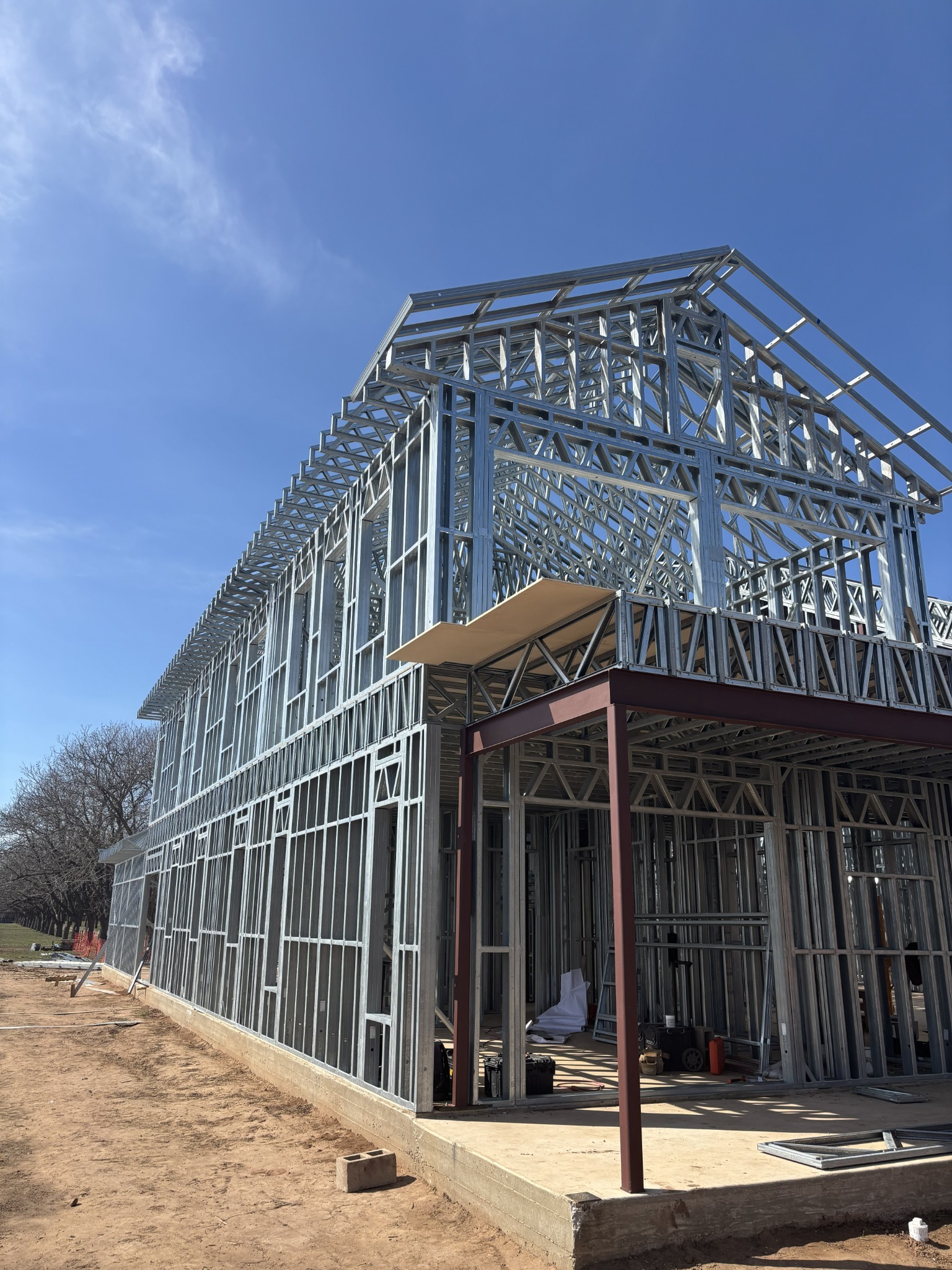
With wood, many details are solved in the field by experienced carpenters. With panelized cold-formed steel, more decisions are resolved before installation begins. Member sizes, gauges, panel layouts, connection details, bracing requirements, openings, truss reactions, and fastening logic need to be coordinated earlier.
That has practical implications.
Architectural drawings, structural drawings, engineering assumptions, window schedules, exterior wall assemblies, roof conditions, and MEP routing need to be aligned before fabrication. For some builders, that can feel restrictive. For high-end projects where rework is expensive, it can be a benefit.
The more expensive the home, the more valuable it becomes to avoid improvising critical framing decisions after materials arrive on site.
Cost: Where Builders Need to Be Careful
Cold formed steel framing is rarely the cheapest framing option when compared only as a material package. In many residential markets, wood still wins on initial material and labor familiarity.
However, custom home decisions should not be based only on the framing line item.
The more relevant comparison is total installed value and downstream risk.
Builders should look at:
- Framing material cost
- Engineering and shop drawing cost
- Fabrication cost
- Installation labor
- Crane or equipment needs, if any
- Schedule reliability
- Waste reduction
- Rework reduction
- Finish trade impact
- Long-term durability expectations
- Insurance or fire-related considerations
- Availability of skilled framing labor
On simple homes, these added factors may not justify the shift. On complex luxury homes, they often deserve a closer look.
A high-end project with large glazing, custom millwork, stone cladding, specialty siding, premium drywall finish levels, and exacting owner expectations can absorb a significant amount of hidden cost when the frame is not clean.
That is where steel framing should be evaluated as a risk-control decision, not just a framing bid.
Panelization Can Change the Schedule Conversation
Panelized metal framing is especially relevant for custom homes because it allows portions of the framing work to move off site.
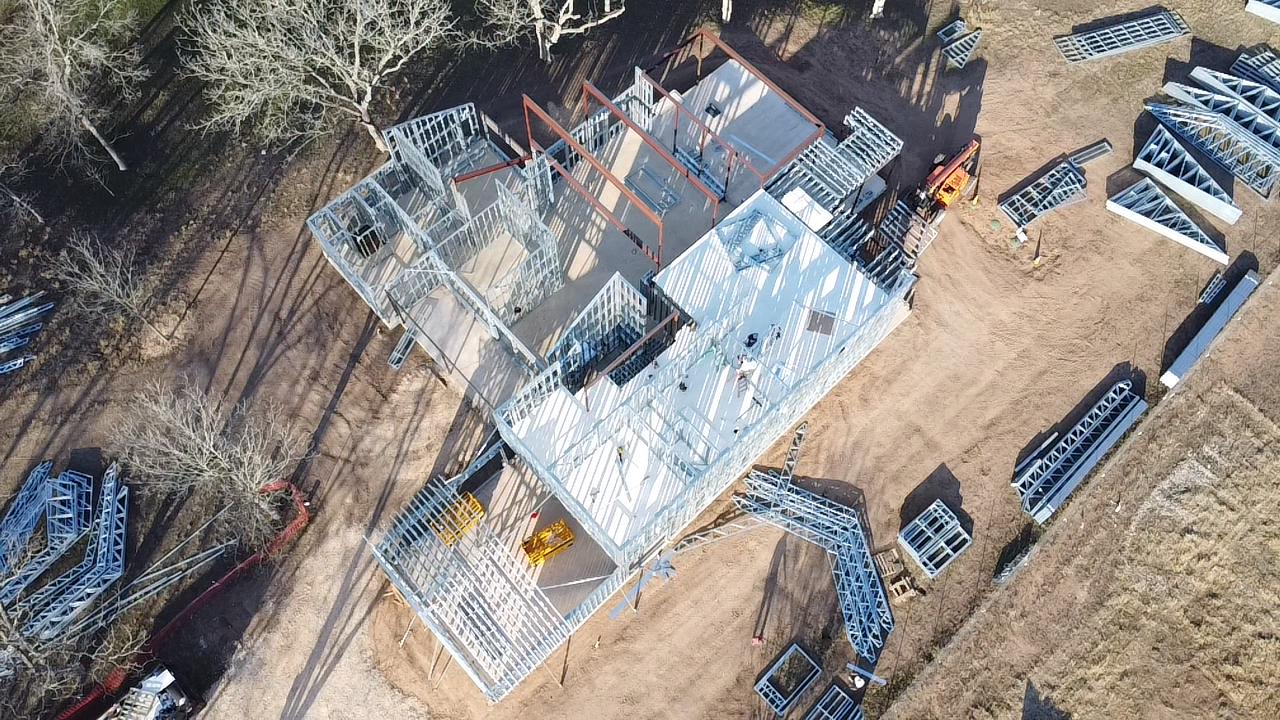
Instead of cutting and assembling every wall condition in the field, wall panels can be fabricated in a controlled environment, labeled, bundled, shipped, and installed in sequence.
This can reduce jobsite cutting, improve layout clarity, limit material waste, and shorten the active framing window. It can also help protect the builder’s schedule from some labor availability issues.
That said, panelization does not eliminate coordination. It increases the need for preconstruction discipline.
Before panels are fabricated, the team needs to resolve details that might otherwise have been handled during framing. Window sizes, wall heights, structural requirements, hold-downs, openings, mechanical penetrations, and panel breaks need to be coordinated.
For a custom builder who prefers to adjust everything in the field, this can be frustrating. For a builder who wants a cleaner construction process, it can be a major advantage.
Design Coordination Matters Earlier
Cold formed steel framing rewards early coordination and penalizes late ambiguity.
For high-end builders, that means the framing partner should be involved before the project is fully released for construction, especially when the home includes unusual architectural or structural conditions.
Important coordination questions include:
The earlier these questions are addressed, the more successful the steel framing package is likely to be.
Steel and High-End Finish Quality
One of the strongest arguments for cold-formed steel in custom homes is dimensional stability.
Wood can shrink, twist, crown, bow, and respond to moisture conditions. Skilled carpenters can manage many of these issues, but the material itself is still variable.
Steel studs do not shrink or warp in the same way. They remain straight and dimensionally stable when properly designed, fabricated, handled, and installed.
That matters when the project includes:
- Flush base details
- Level 5 drywall finishes
- Long sightlines
- Minimalist trim
- Large-format tile
- Integrated cabinetry
- Custom millwork
- Modern cladding systems
- Large glass openings
- Tight ceiling planes
In luxury homes, small framing deviations can become visible finish problems. Cold-formed steel does not automatically solve every finish issue, but it can reduce one major source of dimensional movement and variability.
Fire, Moisture, and Pest Considerations
Cold-formed steel is noncombustible, which can be attractive in custom homes located in fire-prone regions or where owners and design teams are focused on resilience.
Steel also does not rot and is not a food source for termites. In humid, coastal, wooded, or pest-prone environments, those characteristics can support a more durable building strategy.
This does not mean the entire home becomes fireproof, waterproof, or maintenance-free. Assemblies still depend on sheathing, insulation, WRB detailing, cladding, gypsum, sealants, penetrations, roof design, and construction quality.
The frame is only one part of the building system.
But in high-end residential construction, owners often value durable materials and long-term performance. Steel can fit that expectation when properly integrated into the overall envelope and structural design.
Trade-Offs Builders Should Understand
Cold formed steel framing is not the right solution for every custom home. Builders should understand the trade-offs before recommending it.
1. It Requires Earlier Decisions
Steel works best when the design is coordinated before fabrication. Late changes can be more disruptive than they would be with conventional wood framing.
2. It Requires Engineering Familiarity
Not every residential engineer, architect, or framing crew is comfortable with cold-formed steel. The project team needs the right experience or the right support.
3. Field Modifications Are Different
Wood is easy to cut, adjust, and modify on site. Steel can be modified, but field changes require the right tools, details, fasteners, and engineering judgment.
4. MEP Coordination Must Be Intentional
Pre-punched holes and planned service paths can help, but mechanical, electrical, and plumbing trades need to understand how to work with steel framing.
5. The Lowest Bid May Not Reflect the Best Outcome
Cold-formed steel may look more expensive if evaluated only against a wood framing number. The value case is stronger when schedule, rework, durability, and finish coordination are included.
For high-end builders, these trade-offs are manageable, but they should not be ignored.
Conversion from Wood to Steel
Many custom homes are initially designed in wood. Converting to metal framing is possible, but it should be handled carefully.
A wood-to-steel conversion may require revisions to structural drawings, wall details, roof framing, floor framing, exterior assemblies, connection details, and load paths. The project team should not assume that every wood condition has a simple one-for-one steel equivalent.
The best conversions happen when the framing partner, engineer, architect, and builder work together early enough to preserve the design intent while adapting the structure intelligently.
For projects already deep into construction documents, conversion can still work, but expectations need to be realistic. Some details may need to change. Some assumptions may need to be rechecked. Some cost savings may come from improved execution rather than raw material substitution.
What High-End Builders Should Ask Before Choosing CFS
Before using cold-formed steel on a custom home, builders should ask:
These questions create a better decision framework than simply asking whether steel costs more than wood.
Where Mainefactured Framing Sees the Market Going
In custom residential construction, cold-formed steel will likely remain selective rather than universal. It is not going to replace wood in every home, and it does not need to.
Its role is more specific.
Cold formed steel framing makes sense where builders want more control, less dimensional variability, better preconstruction clarity, and a more engineered framing process. It is especially relevant for complex custom homes, luxury developments with repeatable models, fire-conscious designs, and projects where downstream finish quality is a major concern.
The market is moving toward more coordination, not less. Labor availability, schedule pressure, owner expectations, and building complexity are all pushing builders to think beyond conventional field-built framing.
For companies working with panelized CFS systems, the opportunity is not simply to provide studs and tracks. It is to help builders make framing decisions earlier, coordinate details more clearly, and reduce the number of surprises that show up after framing begins.
That is where cold-formed steel becomes more than a material choice. It becomes an execution strategy.
Conclusion
Cold-formed steel is not automatically the right answer for every custom home. For simple residential projects where wood framing is familiar, available, and cost-effective, wood may remain the practical choice.
But high-end custom homes often operate under different rules.
The architecture is more demanding. The finishes are less forgiving. The owners expect precision. The schedule carries more exposure. The downstream trades depend heavily on the quality of the frame.
In that context, cold formed steel framing deserves serious consideration.
The strongest value case comes when builders evaluate CFS as a coordinated system rather than a direct material swap. When the design team, engineer, framing partner, and builder align early, steel can improve dimensional stability, reduce framing variability, support complex geometry, and create a cleaner path for the trades that follow.
For high-end builders, the real question is not whether steel is cheaper than wood on day one.
The better question is whether the project is valuable enough, complex enough, and finish-sensitive enough that framing certainty is worth designing for from the beginning.
Related posts
SEE ALL POSTS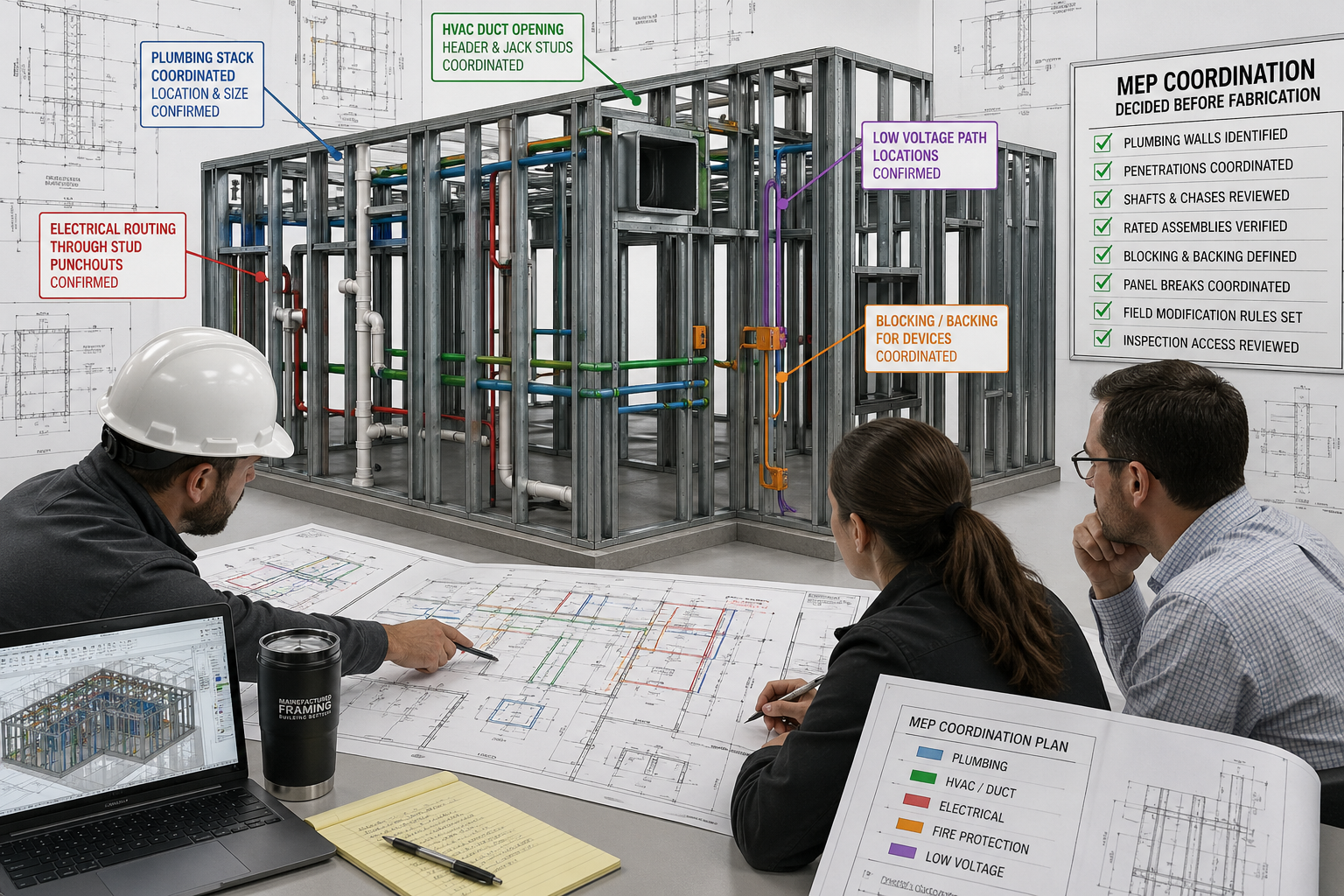
MEP Coordination in Panelized Cold-Formed Steel: What Must Be Decided Before Fabrication
Cold-Formed Steel for Custom Homes: What High-End Builders Need to Know