Metal Trusses in Modern Construction: Why Developers Are Switching to Cold-Formed Steel Roof & Floor Trusses in 2026
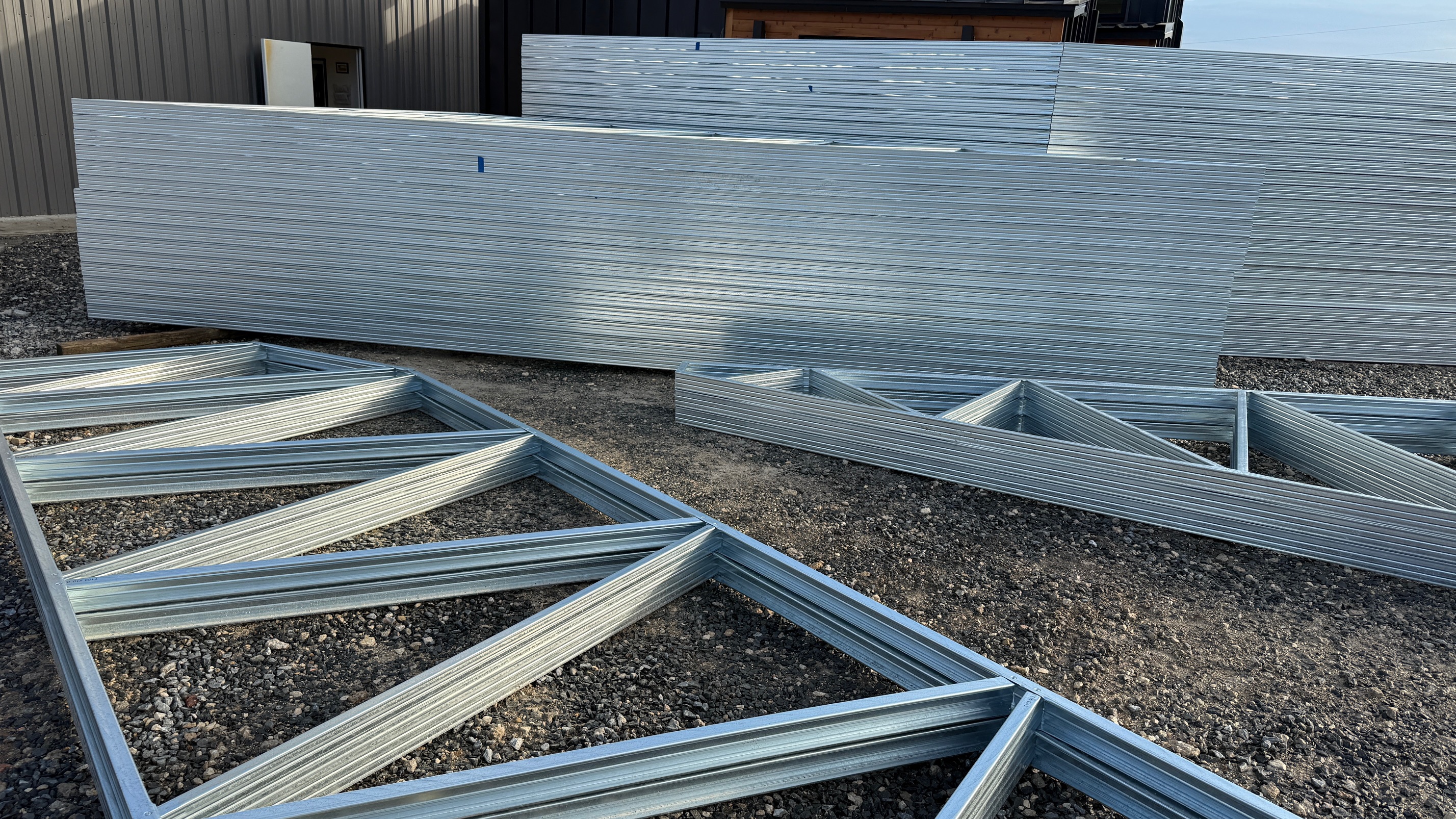
Metal trusses—particularly cold-formed steel (CFS) trusses—are becoming one of the most strategically important framing components in modern multifamily, mixed-use, and commercial construction. Developers who once defaulted to wood trusses are discovering that today’s projects demand far greater predictability, longer spans, better MEP integration, and cleaner coordination with podium structures. Steel trusses deliver all of that, along with a measurable reduction in risk across labor, schedule, and long-term performance.
The shift is not simply a “material preference.” It is a response to real pressures shaping the market in 2026—tighter lending conditions, higher insurance scrutiny, labor shortages, and an increasing need for structural systems that perform consistently over the life of a building.
Why Wood Trusses Are Losing Ground
For years, wood trusses dominated low-rise and mid-rise construction. But as projects have grown denser and more complex, the limitations have become harder to ignore.
Developers frequently report challenges with:
- Inconsistent lumber quality
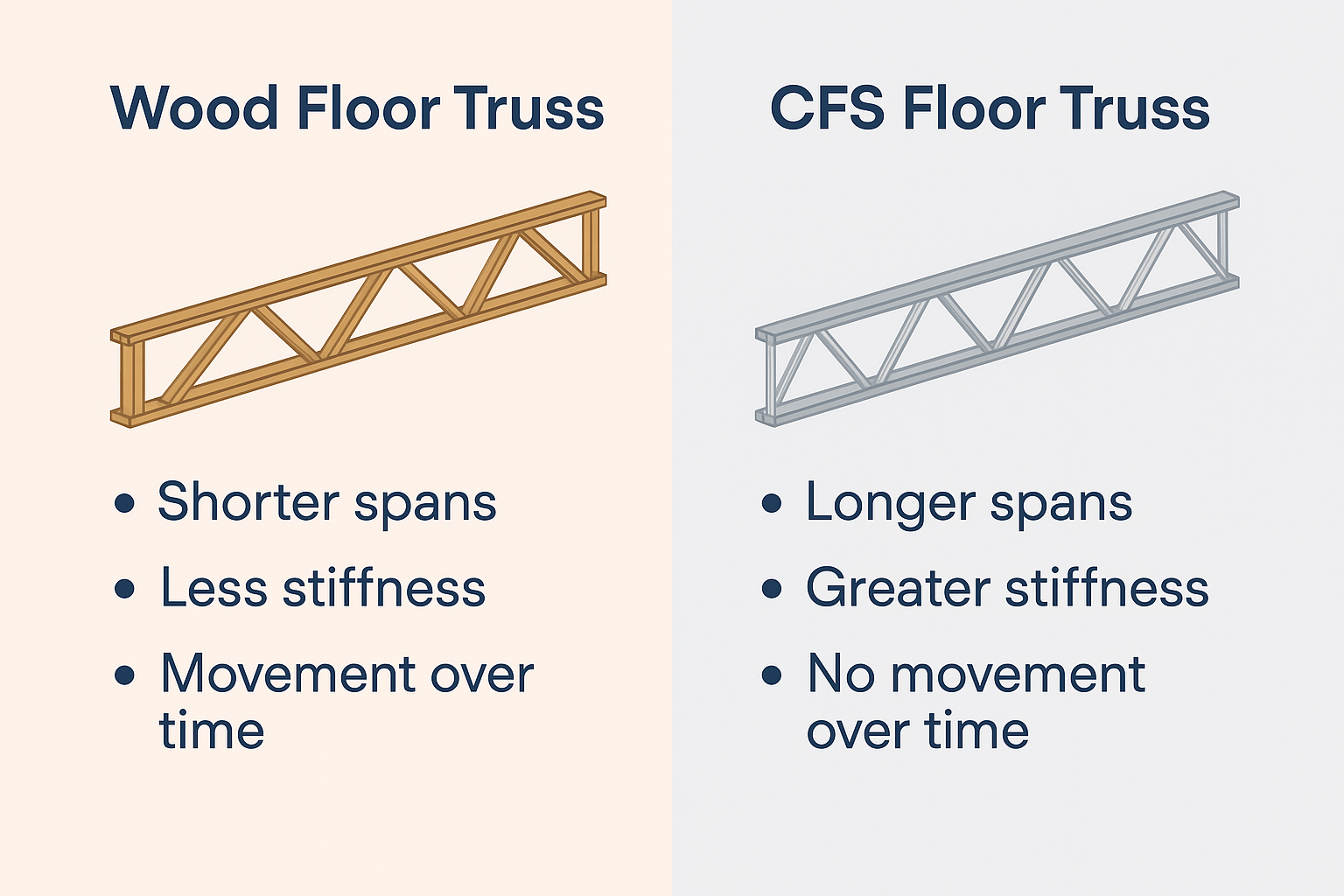
- Shrinkage and movement that affect finishes
- Warping and deflection, especially under MEP loads
- Greater insurance premiums and underwriting friction
- Extended framing durations due to onsite adjustments
- Crew availability and rising labor costs
These issues don’t just show up during construction—they compound over time. When movement telegraphs through walls, ceilings, and floors, buildings see more cracked drywall, uneven surfaces, and callbacks. In multifamily, hospitality, and assisted living facilities, occupant comfort and sound performance also suffer.
As building codes and lender requirements tighten, relying on combustible truss systems introduces more risk than many projects can absorb.
Why Cold-Formed Steel Trusses Are Becoming the Preferred System
Cold-formed steel trusses address these problems at both the structural and operational levels. Because they are engineered digitally, cut by automated roll-forming machines, and assembled in controlled environments, they provide exceptional dimensional accuracy and repeatability. This consistency is one of the biggest reasons developers are incorporating CFS trusses into their 2026 project strategies.
Longer spans and more flexible layouts.
Steel trusses can achieve greater span lengths without excessive depth or bracing. This allows architects to design open-concept units, column-free amenity spaces, and more adaptable commercial or retail areas at grade. On podium buildings, this flexibility helps resolve layout conflicts between levels.
Better integration with mechanical systems.
Floor trusses made from cold-formed steel allow MEP trades to route ducts, plumbing, and electrical more efficiently. Because the members are engineered, openings can be predetermined and coordinated during design instead of cut onsite.
Superior long-term stability.
Steel does not shrink, warp, or absorb moisture. Floors stay flatter. Walls remain straighter. Finishes last longer. And serviceability complaints decrease. For mid-rise multifamily and hospitality projects—where turnover, noise performance, and maintenance are constant concerns—this stability becomes a long-term advantage.
Faster installation and more predictable schedules.
Because CFS trusses arrive labeled, assembled, and ready to crane into place, field installation is significantly faster than traditional stick-framed or wood truss systems. Smaller crews can accomplish more work in less time, improving sequencing and helping developers reach dry-in sooner.
Better insurance and underwriting outcomes.
Many lenders and insurers view non-combustible framing systems more favorably, especially for 4–8 story apartment buildings, senior living communities, and mixed-use developments. Steel trusses support those conversations with tangible reductions in fire risk and long-term durability.
Cost Comparison: Steel Trusses vs Wood Trusses
Most developers initially evaluate trusses based on material cost. But as you move into mid-rise and mixed-use construction, material cost becomes only one piece of the financial picture. Labor availability, install duration, onsite waste, rework, and callbacks all affect the real cost of the structural system.
Below is a simplified comparison:
When all factors are considered, many developers find that steel trusses outperform wood in total project cost—especially when schedule, risk, and long-term performance are included.
Architectural & Structural Advantages
Cold-formed steel trusses give architects more freedom without compromising structural performance. Because steel is non-combustible, dimensionally stable, and engineered with precision, it opens opportunities that would be complex or costly in wood.
Architects frequently note benefits such as:
- Cleaner MEP routing with fewer soffits
- More consistent floor performance
- Reduced vibration in large common areas
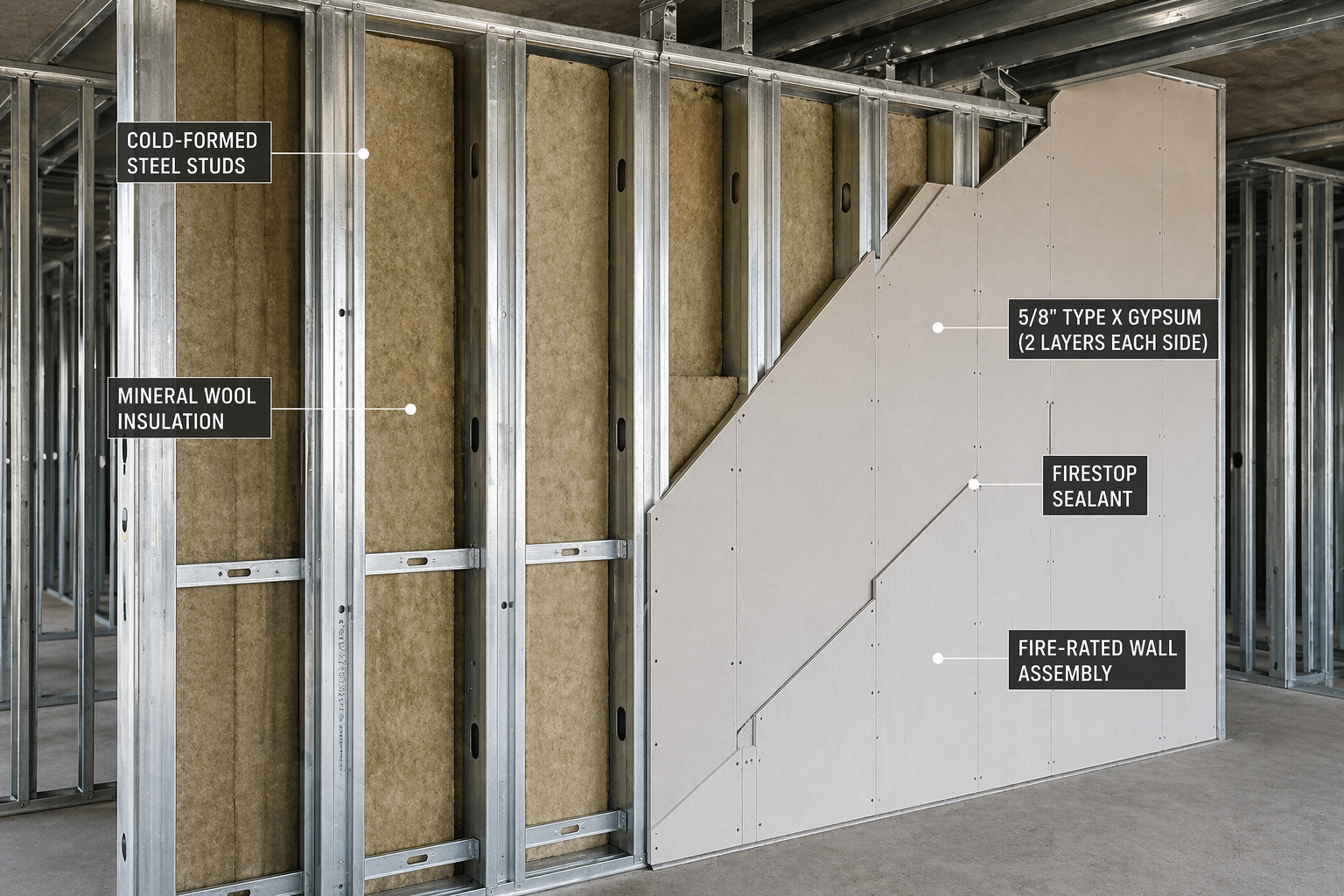
- Improved fire rating assemblies
- More predictable detailing along parapets and roof transitions
For developers and GCs, these design advantages often translate into smoother inspections, faster follow-on trades, and fewer field conflicts.
Why Metal Trusses Matter More in 2026 Than Ever Before
Developers are grappling with interest carry, market uncertainty, and competitive pressure. Every additional day on the schedule has a cost, and every callback has a ripple effect on operations. Structural systems that reduce risk and compress timelines are becoming central to pro forma success.
Cold-formed steel trusses deliver:
- Schedule certainty through predictable prefabrication
- Labor reliability due to simpler, faster installation
- Reduced long-term maintenance because steel doesn’t move
- Better alignment with lender and insurer expectations
- Greater design flexibility to meet modern tenant demands
For these reasons, many teams that once relied on wood trusses are now incorporating steel into their framing strategies—not because it is new, but because it performs better under modern constraints.
FAQ: Metal Trusses for Developers & Builders
Are metal trusses more expensive than wood?
Material cost can be higher, but total project cost—including labor, sequencing, waste, callbacks, and insurance—is often lower with steel.
Do cold-formed steel trusses require special crews?
No. They install quickly with standard framing crews using lifts or cranes. Training is minimal.
Can metal trusses be used on multifamily or mixed-use buildings?
Yes. They are ideal for podium structures, mid-rise buildings, retail + residential combinations, and hospitality projects.
Do steel trusses create noise issues?
No. When paired with proper floor assemblies, they offer excellent acoustic performance and reduce long-term movement that leads to noise complaints.
Are metal trusses fireproof?
Steel is non-combustible and integrates easily into fire-rated systems, often simplifying the overall assembly compared to wood.
Conclusion
Cold-formed steel trusses are quickly becoming a preferred solution for multifamily, mixed-use, commercial, and hospitality developers who need a framing system that performs consistently from preconstruction through long-term occupancy. They provide the strength, stability, and predictability necessary to meet modern design and construction pressures—while helping teams manage risk, compress schedules, and build with greater confidence.
As 2026 approaches, the shift toward non-combustible, pre-engineered framing systems will only accelerate. Cold-formed steel trusses offer a practical, future-ready way to meet those demands.
Related posts
SEE ALL POSTS
Sound-Rated Wall and Floor Assemblies for Cold-Formed Steel in Multifamily and Hotels

Exterior Wall Assemblies with Cold-Formed Steel: Sheathing, WRB, Insulation, and Cladding Coordination